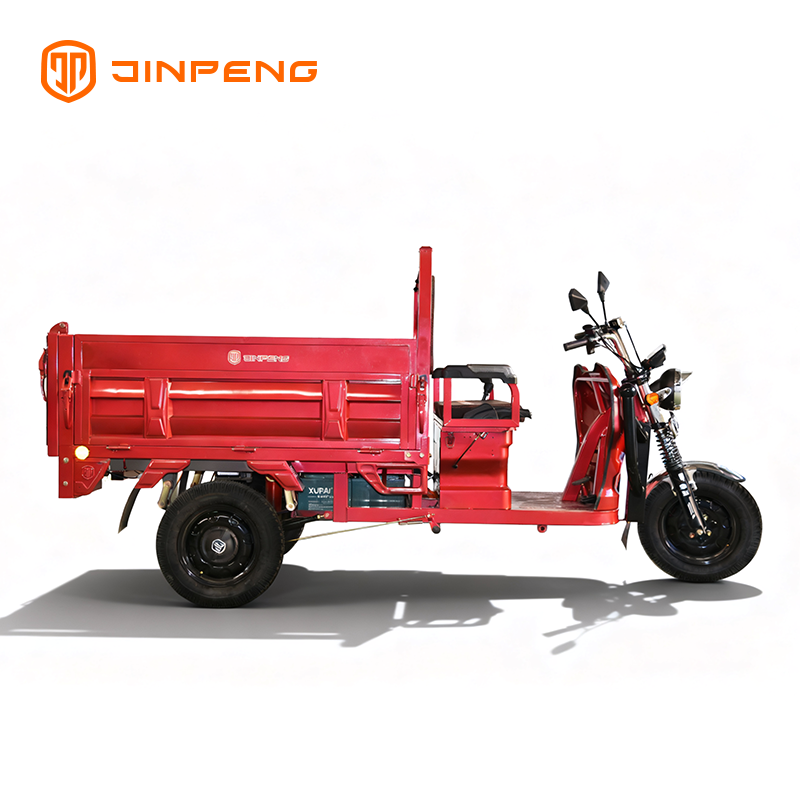
European fleet managers face immense operational pressure today. Low Emission Zones (LEZs) expand rapidly across major urban centers. Meanwhile, traditional diesel van deliveries cost significantly more every single year. You need sustainable alternatives immediately. Transitioning to micro-mobility presents a specific, pressing challenge. You must carefully balance heavy payload capacity against strict European street-legality standards. Navigating these regional rules often confuses even experienced logistics operators. Making the wrong choice leads to grounded vehicles. This article provides a pragmatic, evidence-based framework for your business. You will learn how to evaluate and shortlist a compliant commercial vehicle. We focus on matching technical specifications to real-world fleet deployment needs. By understanding strict certification limits, you can scale operations confidently. We outline exactly what hardware features guarantee both legal city access and daily reliability for European cargo delivery.
Key Takeaways
Compliance is paramount: Operating without proper EEC certification (typically L2e or L5e categories) risks fleet impoundment, invalidates commercial insurance, and restricts access to European city centers.
Payload dictates design: The choice between front-loading and rear-loading electric cargo trikes must align with your specific volumetric and weight requirements.
Pilot before scaling: Testing a localized pilot program helps expose real-world implementation risks like cobblestone vibration wear and winter battery degradation.
Why EEC Certification is Non-Negotiable for European Cargo Delivery
Procuring a commercial delivery tricycle demands strict adherence to regional laws. The foundational requirement is EEC Whole Vehicle Type Approval. This European Economic Community standard certifies safety and performance. It guarantees commercial vehicles meet rigorous manufacturing criteria before entering public roads. Without this certification, you operate illegally.
Ignoring these regulatory realities introduces massive legal risks. Deploying non-certified imports often triggers severe financial penalties. Local authorities routinely impound unapproved delivery units during random street checks. Furthermore, utilizing uncertified vehicles instantly invalidates commercial fleet insurance. In the event of a traffic collision, your business faces unlimited liability. You cannot afford this exposure.
You must clearly understand vehicle classifications. Standard e-bikes fall under the pedelec category. They typically cap assistance at 25 km/h. They rarely require driver licenses. However, heavy commercial trikes fall under the European L-Category system. For example, an L2e-U classification denotes a three-wheel commercial moped. An L5e classification covers heavier tricycles exceeding 45 km/h. Fleet operators must verify local licensing laws. In many EU markets, riding an L2e or L5e vehicle requires an AM or B-class driver license. We strongly advise mapping these license constraints before hiring riders.
Proper certification also guarantees continuous urban access. Cities like Paris, London, and Amsterdam continuously tighten their Low Emission Zones. Diesel vans face outright bans soon. By utilizing an EEC mobility vehicle, you future-proof your fleet. Certified zero-emission micro-mobility units receive exemptions from urban toll charges. They navigate narrow historical streets legally. They bypass restrictive van regulations effortlessly.
Classification
Vehicle Type
Speed Limit
Typical Licensing Requirement
Best Use Case
Pedelec (EPAC)
Standard E-Bike
25 km/h
None
Light parcel delivery, campus logistics
L2e-U
Three-Wheel Moped (Utility)
45 km/h
AM / B License (Country dependent)
Urban last-mile, grocery delivery
L5e
Heavy Motorized Tricycle
> 45 km/h
A1 / B License
High-capacity suburban freight
Core Evaluation Criteria: Matching Features to Delivery Outcomes
Payload Capacity vs. Volumetric Space
Fleet buyers frequently confuse weight limits and volumetric capacity. You must evaluate both metrics independently. Payload capacity measures sheer weight tolerance in kilograms. Volumetric space dictates the total liters of cargo box room. A trike might carry 250 kilograms but offer a tiny cargo box. Conversely, a large box might sit on a weak chassis.
Your shortlisting logic depends entirely on cargo density. High-density goods include beverages, hardware tools, and raw materials. These operations require heavy-duty reinforced chassis designs. They demand robust suspension systems. Low-density goods include standard cardboard parcels, meal kits, and baked goods. These routes require maximized box dimensions. You need tall, wide cargo boxes. Evaluate your average daily manifest. Purchase chassis strength for water jugs. Purchase box volume for potato chips.
Motor Torque and Drivetrain Reliability
Manufacturers often advertise motor wattage aggressively. However, raw wattage serves as a misleading performance metric. You must focus on torque, measured in Newton meters (Nm). Torque represents the actual turning force applied to the wheels. You need high torque to move heavy loads from a dead stop. Delivery routes require constant stopping and starting. Navigating European inclines requires serious pulling power. We recommend seeking motors offering at least 80 to 100 Nm of torque.
Drivetrain mechanics deeply impact daily reliability. Buyers must choose between mid-drive and hub motors. Mid-drive motors sit near the pedals. They leverage the vehicle's gearing system efficiently. They provide superior hill-climbing ability and better weight distribution. Hub motors sit inside the wheel center. They offer simpler mechanics but struggle under heavy uphill loads. A professional electric cargo trike generally benefits from a robust mid-drive system. This setup reduces maintenance frequency and improves handling.
Battery Architecture and Range Realities
You must address the discrepancy between stated and actual range. Laboratory range estimates rarely reflect street realities. A manufacturer might claim a 100-kilometer range. Reality often tells a different story. You must account for maximum payload weight. You must factor in frequent stop-and-go traffic patterns. Temperature drops significantly reduce battery efficiency.
Shift continuity relies on smart battery architecture. Fleet managers must evaluate plug-in charging against swappable battery systems. Plug-in models require hours of downtime. They force vehicles off the road. Swappable battery systems allow continuous operations. A rider swaps a depleted battery for a fresh unit within seconds. For high-volume logistics, swappable architecture proves essential.
Cold Weather Sag: Lithium-ion cells lose capacity below freezing. Expect up to a 30% range reduction during European winters.
Payload Penalty: Running constantly at maximum weight limits demands higher energy output per kilometer.
Implementation Risks: What to Anticipate Before Rollout
Successfully launching a micro-mobility fleet requires intense foresight. You cannot simply purchase vehicles and hand over the keys. Several distinct implementation risks threaten early adoption. You must map out infrastructure constraints before ordering units. Commercial fleets demand secure overnight parking. Large tricycles require substantial floor space. They do not fit inside standard bicycle racks.
Charging depot requirements also pose a major hurdle. Commercial batteries draw significant electrical current. You must audit your depot grid capacity. Charging twenty vehicles simultaneously might overwhelm older electrical panels. You may need specialized commercial charging racks. Always consult a certified electrician before finalizing depot leases.
Rider adoption introduces another critical variable. A fully loaded three-wheeler handles differently than a standard bicycle. The center of gravity shifts dramatically based on payload placement. Cornering stability becomes a primary safety concern. Riders cannot lean into turns naturally. Braking distances increase significantly when hauling 200 kilograms. You must implement mandatory rider training protocols. Do not allow untrained staff onto busy streets. Proper training prevents rollovers and extends vehicle lifespan.
Cargo security dictates urban success. Residential drop-offs require couriers to leave vehicles unattended. Opportunistic theft plagues major cities. You must prioritize secure cargo containment. Demand weather-proof enclosures. Fabric covers fail quickly and offer zero theft protection. Require electronically locking cargo boxes. Look for systems utilizing RFID fobs or automatic slam-locks. A certified electric tricycle must protect both the rider and the customer's packages seamlessly.
Shortlisting Framework: How to Make Your Final Decision
Selecting the ideal vehicle requires a structured approach. Avoid buying strictly based on visual aesthetics. Follow a disciplined procurement process. This framework ensures you acquire functional, legally compliant assets.
Step 1: Define the Use Case. Categorize your exact operational need. A cold-chain grocery operation requires insulated boxes and auxiliary power. A last-mile parcel service demands maximum volumetric space. Intra-campus logistics might only need a simple flatbed design. Clearly define the daily mission first.
Step 2: Verify Compliance. Never review technical specifications before confirming street legality. Request the vendor's EEC Certificate of Conformity (CoC) upfront. Verify the document matches the specific chassis model. If a supplier hesitates to provide certification documents, walk away immediately. An authentic EEC electric tricycle always carries verifiable paperwork.
Step 3: The Pilot Phase. Do not deploy an untested fleet. Advise running a 30-day pilot program. Purchase or lease one to two units initially. Test real-world battery drain on your actual routes. Gather direct feedback from your riders regarding ergonomics and handling. Monitor structural integrity closely. Local road surfaces, especially historic cobblestones, reveal chassis weaknesses rapidly. Pilot testing exposes flaws before you commit significant capital.
Conclusion
Choosing the right commercial delivery vehicle represents a major strategic milestone. You must meticulously balance legal compliance, operator safety, and realistic operational metrics. Start by defining your exact cargo needs regarding weight and volume. Never compromise on proper European street certification. L-category approval protects your business from crushing liabilities and fines.
Cutting corners on certification ultimately destroys your operations. Relying on unverified imports leads to grounded fleets and canceled insurance policies. Prioritize local support, strong motor torque, and intelligent battery architecture. Real-world testing remains your best defense against procurement mistakes. We strongly encourage fleet managers to audit current route data immediately. Request a rigorous compliance checklist or schedule a hardware demo from vetted B2B suppliers. Take controlled, calculated steps toward sustainable urban logistics today.
FAQ
Q: What happens if my electric cargo trike is not EEC certified?
A: Operating uncertified vehicles exposes you to extreme legal liabilities. Local authorities can legally impound your fleet during routine checks. Uncertified tricycles lack valid commercial insurance coverage. If your rider causes an accident, your company bears total financial responsibility. Always demand valid Certificate of Conformity documents.
Q: Do riders need a driver’s license to operate an EEC mobility vehicle?
A: It depends entirely on the vehicle's EEC classification and local country laws. Standard 25 km/h pedelecs generally require no license. However, an L2e classification (45 km/h limit) often mandates a basic AM or B-class license. Always verify specific municipal requirements before hiring couriers.
Q: How does European winter weather affect electric tricycle range?
A: Cold weather causes significant battery degradation. Lithium-ion cells experience voltage sag in freezing temperatures. You should expect a 20% to 30% reduction in actual driving range during winter. We strongly advise utilizing swappable battery reserves to maintain continuous delivery shifts during cold months.
Q: Are three wheels better than two for cargo delivery?
A: Tricycles offer superior payload capacity and unmatched stability at rest. They allow couriers to load and unload without balancing the vehicle. While two-wheelers provide better agility in tight spaces, three wheels remain essential for heavy, high-volume commercial freight.
Beneath the Tianshan Mountains in June, sweet fruits fill the air and bustling business exchanges thrive. On June 25, 2026, the 9th China-Eurasia Expo grandly kicked off in Urumqi, Xinjiang. As an influential comprehensive international event along the Belt and Road Initiative, this year’s expo hit
From May 26 to 29, the highly anticipated "Comprehensive Upgrade, Leading the Future with Intelligence" JP Group 2026 Business Summit & New Product Launch grandly kicked off at Xiamen International Expo Center.