Miscalculating your daily cargo needs carries serious operational and financial risks. Buying the wrong model often leads to premature motor burnout, dangerously long braking distances, and highly inefficient delivery routes. Evaluating a heavy-duty three-wheeler goes far beyond looking at its top speed. You must strictly align chassis strength, motor torque, and cargo bed dimensions with your specific daily use cases. Without proper sizing, routine logistics quickly become unsafe and highly unprofitable. We built this guide to fix this exact knowledge gap. This article provides a concrete, math-based evaluation framework. We will help you determine your exact weight limits and cargo size requirements. You will learn how to calculate dynamic loads accurately. We will teach you to assess terrain impacts on battery range. Finally, you will learn how to audit your dimensional needs perfectly before making a purchase.
Key Takeaways
- Total payload capacity must account for the rider, the cargo, and any modular add-ons; it is not just the maximum weight of the goods.
- Volume often dictates cargo bed size before weight limits are reached; matching bed dimensions to standard delivery crates or equipment is critical.
- Usable payload decreases on steep terrains; continuous motor output and battery range degrade dynamically under heavy loads.
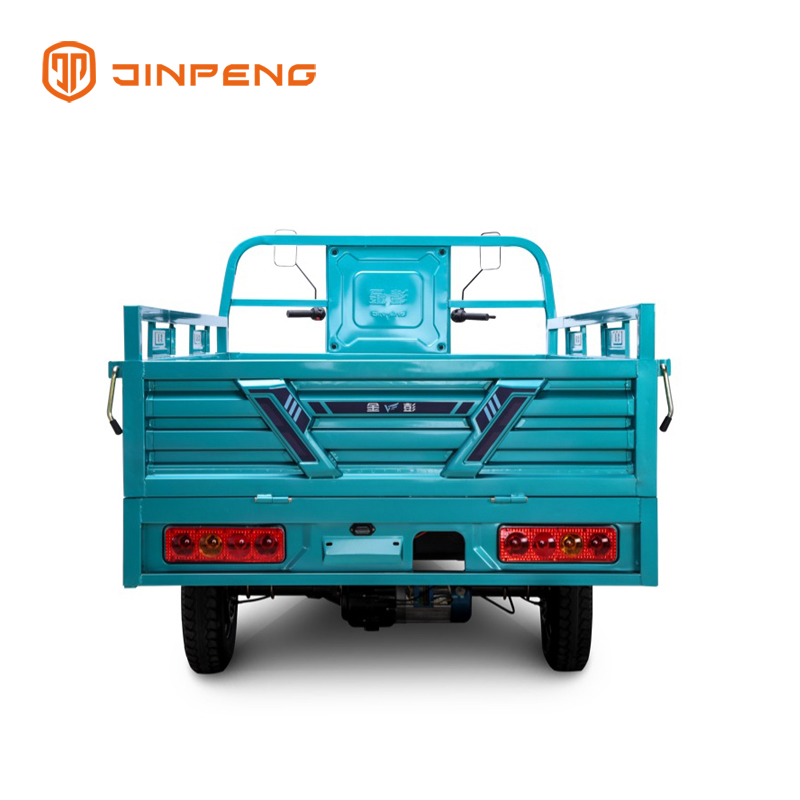
- Heavy-duty applications require specific structural reinforcements (e.g., dual braking, rigid steel frames), as seen in commercial-grade models like the JG200 electric cargo tricycle.
Decoding Electric Cargo Tricycle Payload: Total vs. Usable Capacity
You must understand the difference between gross limits and usable limits. Gross Vehicle Weight Rating (GVWR) represents the absolute maximum weight the vehicle structure can handle. This total figure includes the metal frame, the heavy battery pack, the rider, and the goods. Usable cargo capacity is much smaller. You must calculate this usable number precisely to avoid overloading the vehicle.
The Rider Equation
Many buyers ignore their own body weight during calculations. A heavy rider drastically reduces the advertised payload limit. If a manufacturer advertises a 500 lb limit, and you weigh 250 lbs, you only have 250 lbs remaining for goods. You must always subtract rider weight first. Factoring in winter clothing, heavy work boots, and security chains removes even more capacity. Understanding your true electric cargo tricycle payload ensures you do not break the vehicle during its first month of hard use.
Static vs. Dynamic Load
A parked trike easily holds 500 lbs on a flat garage floor. We call this a static load. Moving loads behave entirely differently. When you corner sharply or hit a deep pothole, kinetic energy multiplies the physical force on the frame. A 350 lb dynamic load can easily exert 600 lbs of sudden, sheer force on the chassis. Suspension systems absorb some impact, but the frame takes the rest.
Common Mistake: Never trust a maximum weight claim blindly. Many brands test their vehicles on perfectly flat, smooth indoor test tracks. Real streets have bumps, curbs, and loose debris. Treat the advertised maximum limit as an absolute ceiling, never as a daily operating target.
Sizing the Cargo Bed: Volume, Modularity, and Center of Gravity
Weight limits only tell half the story. Operators frequently run out of physical space before ever hitting the weight ceiling. You must evaluate the cargo bed dimensions just as rigorously as the motor specs.
The Volume vs. Weight Dilemma
We call this the pillow versus brick hauling dilemma. Hauling down pillows requires massive volume but almost zero weight capacity. Conversely, hauling dense bricks requires minimal space but instantly maxes out weight limits. A local florist delivering large bouquets needs a high-volume bed. A handyman hauling ceramic tile boxes needs a heavy-duty, low-volume bed. You must know your cargo density.
Standard Cargo Dimensions
Measure your standard logistics containers carefully. Euro crates, standard beverage coolers, and heavy-duty toolboxes have fixed, rigid dimensions. Your cargo bed must accommodate these exact shapes. Wasted space around the edges causes items to shift violently during transit. Shifting cargo creates severe handling instability.
Best Practice: Always measure the internal dimensions of the cargo bed. Do not rely on external footprint measurements, as thick side walls reduce usable space.
Standard Logistics Dimension Guidelines
| Cargo Type | Typical Challenge | Volume Issue | Recommended Bed Style |
| Parcel Boxes | Stacking securely | High volume, low weight | Enclosed tall box |
| Construction Materials | Extreme density | Low volume, extreme weight | Reinforced flatbed |
| Food & Beverage Coolers | Fixed rigid dimensions | Moderate volume, heavy | Drop-down side panels |
| Landscaping Tools | Awkward lengths | Long dimensions, variable | Open flatbed |
Center of Gravity (CoG) Risks
Loading high-volume items creates serious safety risks. Stacking tall boxes raises the vehicle's center of gravity significantly. A high CoG makes the three-wheeler highly prone to tipping during tight turns. You should prioritize a wider, lower cargo bed whenever possible. Low beds provide superior cornering stability compared to narrow, deep boxes.
Modularity and Scalability
Your business needs will likely change over time. Modular cargo beds offer excellent operational flexibility. Drop-down sides allow you to load oversized items easily from the curb. Flatbed conversions let you haul long lumber or PVC piping. Enclosed, lockable boxes secure valuable goods from bad weather and theft. Scalable designs keep your vehicle useful across multiple seasons and shifting business models.
How Terrain and Route Topography Alter Payload Requirements
Physics strictly dictates how well a loaded vehicle climbs. A specification sheet rarely accounts for your local hills. Topography changes your power requirements drastically.
The Incline Penalty
Hauling weight uphill changes everything. Pushing a 400 lb payload on a flat warehouse floor requires minimal energy. Taking that exact same 400 lbs up a 10-degree incline requires exponentially more torque. Gravity acts as a massive opposing force pulling the vehicle backward. If you carry heavy loads on hilly routes, you cannot rely on entry-level motors.
Motor Specs for Load Hauling
Wattage (W) and Torque (Nm) must scale directly with your typical load. High payloads on hilly routes demand serious, sustained power. Standard single hub motors often overheat and stall on long climbs. You need mid-drive motors or dual hub motor setups for continuous uphill hauling. High torque ratings prevent the motor from burning out under intense physical strain. Always look for torque figures above 80 Nm for commercial applications.
Battery Sag and Range Degradation
Heavy cargo demands massive electrical current from the battery pack. This high current draw causes severe voltage sag. The battery voltage drops temporarily under intense load. This sag often triggers early low-voltage system cutoffs. It significantly reduces your advertised battery range per charge. You might expect 40 miles of range on paper, but you will only achieve 20 miles when fully loaded on steep hills. Cold weather compounds this battery sag even further.
Structural Integrity and Safety Under Maximum Load
Power means nothing if the chassis breaks. Heavy daily hauling requires commercial-grade structural integrity. Consumer-grade components fail quickly under commercial stress.
Chassis and Frame Materials
Standard consumer trikes use basic aluminum frames. They work fine for hauling light groceries across town. True heavy-duty commercial hauling requires high-carbon steel frames. Steel bends slightly under heavy stress instead of snapping instantly. It absorbs harsh road vibrations much better than rigid aluminum. Pay close attention to the weld quality across the main frame joints.
Braking Systems
Stopping a heavy load is much harder than moving it. Hydraulic disc brakes are never an optional luxury. They are a non-negotiable safety requirement for any cargo trike. Mechanical cable brakes stretch, fray, and fail under extreme tension. Hydraulic fluid provides consistent, powerful stopping force for a fully loaded vehicle. Furthermore, hydraulic systems do not suffer from severe brake fade during long downhill descents.
Tire and Suspension Ratings
Dynamic stress easily destroys cheap tires. You need fat tires or reinforced multi-ply tires for heavy hauling. Four-ply or six-ply ratings prevent catastrophic blowouts when hitting curbs at high speeds. Heavy loads also require heavy-duty suspension forks and rear leaf springs to manage the bounce. Standard coil shocks bottom out instantly under maximum weight.
Benchmark Example
Look at established commercial-grade models for structural inspiration. The JG200 electric cargo tricycle serves as an excellent benchmark in this category. It features proper load distribution and highly durable suspension geometry. Designs modeled like this can handle continuous heavy transport safely without premature frame fatigue.
The Buyer’s Evaluation Framework: Calculating Your Exact Needs
We developed a simple, math-based framework to calculate your exact needs. Do not guess your requirements. Follow these three steps carefully to ensure you buy the correct vehicle.
- Step 1: The Weight Audit. Add your exact Rider Weight to your absolute Max Cargo Weight. Then, add a strict 20% safety buffer to that total. If you weigh 200 lbs and carry 300 lbs, your base total is 500 lbs. Adding a 20% buffer means you need a true electric cargo tricycle payload rating of at least 600 lbs. Never buy a trike that exactly matches your maximum anticipated weight.
- Step 2: The Dimension Audit. Measure the exact Length, Width, and Height of your largest single physical item. Do the exact same for standard crate combinations you haul daily. Compare these numbers directly to the manufacturer's inner bed dimensions. Ensure you have at least one inch of clearance on all sides for easy loading.
- Step 3: The Route Audit. Map out your daily delivery route carefully. Find the steepest incline on the map. Note the longest continuous driving distance between charging stops. These two metrics dictate your required motor torque and your minimum battery Amp-hours (Ah).
Shortlisting Logic
Use this collected data to ruthlessly eliminate weak options. Reject any models failing on braking capacity, frame material, or motor torque. Disregard their advertised static payload if the structural components look weak. A high capacity number on a marketing sheet means absolutely nothing if the brakes cannot stop the mass safely.
Conclusion
Purchasing the right cargo trike is an exercise in strict risk management. It directly impacts your daily operational efficiency and worker safety. We constantly see the severe dangers of under-speccing vehicles for commercial use. A cheaper, underpowered model always costs you more in long-term maintenance and daily downtime. Take the time to audit your weights, measure your boxes, and map your routes accurately.
You must align your physical cargo needs with the vehicle's structural realities. We highly recommend contacting a dedicated sales team with your exact specifications before making a purchase. Review the technical spec sheets carefully. Always choose a model genuinely engineered for heavy, continuous transport.
FAQ
Q: How much weight can a standard adult electric tricycle carry?
A: Consumer models typically handle between 250 and 350 lbs. This limit includes the rider and light cargo. Commercial cargo models push these limits much higher. They safely carry between 400 and 800+ lbs depending on the frame structure. You must always check if the manufacturer specifies total system weight or just the rear bed capacity.
Q: Does payload capacity include the weight of the rider?
A: Yes, it almost always includes rider weight. Industry standard definitions use Gross Vehicle Weight Rating (GVWR) to define total capacity. If a trike advertises a 500 lb payload and you weigh 250 lbs, you only have 250 lbs remaining for cargo. Always subtract your exact body weight first.
Q: What are the legal compliance limits for electric cargo trikes in 2025?
A: The US categorizes them into Class 1, 2, and 3 e-bikes. Class 2 models limit throttle speeds to 20 mph. Class 3 models provide pedal assist up to 28 mph. However, many municipalities restrict commercial cargo trikes to 15 mph in bike lanes. Heavy vehicles fully loaded often face stricter local sidewalk or trail access restrictions.
Q: How do I transport a heavy-duty electric cargo tricycle?
A: Moving large cargo trikes presents major logistical challenges. Standard car hitch racks cannot support their extreme width or weight. You will need a specialized heavy-duty trike hitch rack, a small utility trailer, or a pickup truck bed. Always use heavy-duty ratchet straps to secure the metal frame tightly, never the wheels or handlebars.


