Replacing delivery vans or passenger cars actively reduces carbon footprints across urban logistics. Fleet operators and businesses often attempt this transition to achieve greener daily operations. However, this shift only succeeds when the vehicle perfectly matches your daily workload. Over-indexing on purchase price rather than component durability frequently leads to stranded assets. Weak frames and undersized motors create immediate safety liabilities. These failures will constantly disrupt your operational flow. You need a standardized, evidence-based evaluation framework before buying any fleet vehicle. This guide provides exactly what you need to assess critical specifications, handling dynamics, and supplier reliability. You will learn how to align payload requirements seamlessly alongside battery capacities and motor outputs. We will also explore the distinct differences between front-loading and rear-loading chassis designs. Ultimately, you will gain the knowledge necessary to vet manufacturers and ensure long-term commercial success.
Key Takeaways
- Prioritize Torque Over Top Speed: For heavy payloads, a high-torque mid-drive or dual-hub motor is non-negotiable.
- Assess the True Footprint: Tricycles offer unmatched stability at low speeds but require wider storage and have different cornering dynamics compared to two-wheelers.
- Supplier Support is a Feature: Post-purchase parts availability and SLA agreements are just as critical as the vehicle's spec sheet.
- Match Form to Function: Front-loading (tadpole) and rear-loading (delta) designs serve fundamentally different commercial and personal use cases.
Defining Your Operational Success Criteria
Before examining spec sheets, you must define the exact physical demands of your daily routes. Buying a heavy-duty commercial trike for light courier work wastes resources. Conversely, purchasing a consumer-grade model for industrial hauling guarantees rapid mechanical failure.
Payload Weight vs. Volume Requirements
You must differentiate between hauling dense materials and high-volume goods. Dense materials include tools, liquids, or construction supplies. High-volume goods include empty cardboard packages, floral arrangements, or groceries. A heavy-duty electric cargo tricycle might handle 500 pounds easily, but if the cargo box lacks cubic volume, your weight capacity becomes useless.
You should calculate the Gross Vehicle Weight Rating (GVWR) needed for your operations. Follow these steps to determine your true capacity needs:
- Weigh your heaviest average daily cargo load.
- Add the weight of the heaviest rider operating the vehicle.
- Include the weight of any aftermarket additions, like heavy lockboxes or refrigeration units.
- Select a tricycle offering a GVWR at least 20% higher than this combined total to prevent suspension bottom-out.
Route Topography and Range Realities
Establish strict baseline distances and elevation changes for your typical routes. Manufacturers usually test vehicles under ideal conditions on flat surfaces. In reality, manufacturer-stated range typically drops by 30-40% under maximum payload conditions. Stop-and-go traffic drains batteries significantly faster than continuous cruising. Accelerating a heavy mass from a dead stop requires massive energy spikes. If your route includes steep hills, expect an even sharper decline in actual range.
Rider Expertise and Adoption Risks
You must acknowledge the distinct learning curve associated with three-wheeled vehicles. Rigid tricycles handle very differently on crowned roads compared to leaning two-wheelers. Because they do not lean, a sloped road surface pulls the vehicle toward the curb. Riders must actively steer against this slope. Factor in adequate training time for fleet operators or family members. Skipping this familiarization period dramatically increases the risk of early accidents.
Core Electric Cargo Tricycle Specifications to Evaluate
Commercial buyers must look past flashy marketing materials. True reliability lives within the granular details of the vehicle's engineering. Understanding these metrics ensures your fleet withstands daily urban punishment.
Motor Architecture and Output
When reviewing electric cargo tricycle specifications, focus on torque rather than just wattage. Torque, measured in Newton-meters (Nm), dictates the actual turning force applied to the wheels. A 250W motor delivering 85Nm of torque will out-climb a 750W motor producing only 40Nm. For reliable hill-climbing while carrying heavy cargo, 80Nm+ is the strict minimum baseline.
You must also choose between mid-drive motors and hub motors. Mid-drive motors sit at the pedals. They leverage the mechanical gearing of the drivetrain. This allows the motor to spin efficiently at high RPMs even when the vehicle moves slowly up a hill. Hub motors sit inside the wheel itself. Dual-hub motors offer excellent redundancy, but mid-drives generally provide superior climbing efficiency under maximum load.
Battery Chemistry and Compliance
Commercial operations cannot compromise on battery safety. Require UL 2849 certification or EN15194 compliance for all battery systems. These rigorous testing standards prevent thermal runaway and catastrophic fires. Look for battery packs utilizing high-capacity cells from reputable manufacturers like Samsung or LG.
Do not rely solely on Amp-hour (Ah) ratings. Calculate the true energy capacity in Watt-hours (Wh) using a simple formula: Voltage (V) multiplied by Amp-hours (Ah) equals Watt-hours (Wh). A 48V 15Ah battery offers 720Wh of usable energy. Higher Watt-hour numbers translate directly into longer real-world range.
Battery Certification Standards Overview
| Standard | Region Focus | Primary Testing Scope |
| UL 2849 | North America | Electrical systems, battery pack safety, and charger compatibility. |
| EN 15194 | Europe | Mechanical strength, EMC, and electrical system integrity for EPACs. |
| UN 38.3 | Global | Transportation safety testing (vibration, shock, altitude simulation). |
Braking and Suspension Systems
Stopping a heavy mass safely requires immense friction. Demand dual hydraulic disc brakes on your vehicle. Hydraulic fluid transfers pressure much more efficiently than steel cables. This provides maximum stopping power and prevents brake fade on long descents. Assess your front and rear suspension needs carefully. High-quality suspension forks protect fragile cargo from damage. They also protect riders from severe fatigue caused by rough urban infrastructure.
Drive Systems
The drivetrain connects your motor power to the wheels. Differentiate between traditional chain drives and modern belt drives before purchasing.
Comparison Chart: Chain Drive vs. Belt Drive
| Feature | Traditional Chain Drive | Carbon Belt Drive |
| Maintenance Level | Requires frequent tensioning and regular lubrication. | Virtually zero maintenance. No grease required. |
| Durability | Prone to stretching and snapping under high torque. | Lasts up to three times longer than standard chains. |
| Upfront Cost | Lower initial purchase and replacement cost. | Higher upfront investment required. |
| Noise Profile | Noticeable mechanical clattering, especially when dirty. | Completely silent operation in all weather conditions. |
Analyzing Chassis Types: Tadpole (Front-Load) vs. Delta (Rear-Load)
The physical arrangement of the wheels drastically alters how the vehicle steers, balances, and carries weight. You must match the specific chassis geometry to your cargo type.
Tadpole Trikes (Two Wheels in Front)
Tadpole designs position the cargo box ahead of the rider between two front wheels. They utilize complex steering linkages to turn both front wheels simultaneously.
- Best for: Keeping a close eye on valuable cargo or children. They offer much tighter turning radii. You can navigate narrow urban bollards easily because the widest point of the vehicle sits directly in your field of vision.
- Limitations: The steering linkage adds mechanical complexity. They also suffer from potentially limited cargo volume compared to massive rear-boxes. The front wheel placement restricts how wide the front box can actually become.
Delta Trikes (Two Wheels in Back)
Delta designs feature a single steering wheel in the front and two drive wheels in the rear. The cargo sits behind the rider on a wide platform.
- Best for: Hauling extremely heavy industrial loads. They provide maximum cubic volume for large delivery boxes. You can easily strap pallet-sized payloads directly onto a flatbed delta frame.
- Limitations: The wider rear track requires very careful maneuvering in dense traffic. Riders easily forget the rear width and clip curbs. They also present a greater risk of tipping over if you corner aggressively at high speeds.
Tilt-Steering Mechanisms
Innovative manufacturers now incorporate articulating frames into rigid chassis designs. Evaluate whether the model includes tilt-steering technology. These mechanisms allow the main frame and rider to lean naturally into turns while keeping all three wheels planted on the pavement. This technology significantly reduces rollover risks at higher speeds. It bridges the gap between the static stability of a trike and the dynamic agility of a bicycle.
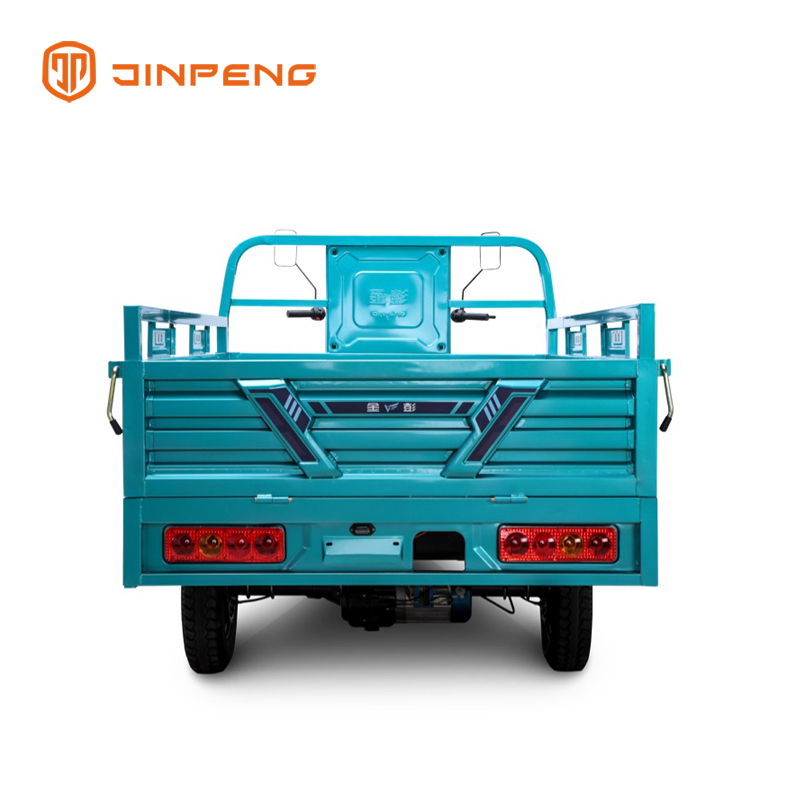
Benchmarking Heavy-Duty Models (Spotlight: Electric Cargo Tricycle JG180)
When sourcing vehicles for industrial fleets, you need a baseline standard to judge other models against. Consumer-grade bikes simply melt under continuous commercial stress.
Industrial Benchmark Standards
Use the electric cargo tricycle jg180 as a strict reference point for evaluating true commercial-grade builds. Models in this tier abandon lightweight commuter components entirely. They prioritize brute strength, mechanical redundancy, and continuous uptime.
Frame Construction
Look specifically for reinforced high-carbon steel or thick-gauge aluminum alloy tubes. The frame must withstand continuous heavy impacts from potholes while fully loaded. Inspect the weld points carefully. Gusseted joints indicate a frame designed for commercial longevity. Thin, unreinforced tubing will eventually crack under repetitive harmonic stress.
Modularity
Commercial needs evolve constantly. Assess whether the manufacturer allows you to customize the rear cargo bed. A modular chassis lets you swap between a flatbed for lumber, a secure lockbox for parcels, or a temperature-controlled unit for grocery delivery. This versatility prevents the vehicle from becoming obsolete if your business model pivots.
Component Redundancy
Commercial vehicles require overbuilt components. Check for reinforced wheel spokes. You should demand a 12-gauge minimum thickness to prevent wheel buckling under heavy lateral loads. Look for heavy-duty differential gears on rear-axle models. A differential allows the outside wheel to spin faster than the inside wheel during turns, reducing tire scrub. Finally, demand dual-battery capabilities. Wiring two high-capacity batteries in parallel eliminates range anxiety during demanding full-shift operations.
How to Vet an Electric Cargo Tricycle Supplier
Your relationship with the manufacturer begins, not ends, on the day of purchase. A brilliant vehicle becomes entirely worthless if you cannot source replacement brake pads six months later.
Compliance and Safety Documentation
A trustworthy electric cargo tricycle supplier will operate with complete transparency. They will readily provide independent battery certifications and frame stress test reports upon request. They should also supply clear documentation regarding regional street-legal classifications. Do not accept vague assurances about legal compliance. Demand the actual paperwork.
Warranty and SLA Transparency
Look past bold marketing claims of "1-year limited warranties." You must define exactly what the policy covers. Does it cover the motor internals, or just the outer casing? Ask for explicit battery degradation thresholds. For example, a strong warranty guarantees replacement if battery capacity drops below 70% within two years. Ensure the warranty covers structural frame integrity without unreasonable exclusionary clauses.
Parts Availability and Domestic Support
The single biggest risk of direct-importing vehicles is operational downtime. Require hard evidence of a domestic parts warehouse. If they lack local warehousing, ensure they use standardized, open-market components from brands like Shimano, Bosch, or Bafang. Local mechanics can easily service standardized parts. Proprietary electronics usually mean weeks of waiting for overseas shipping when a controller inevitably burns out.
Customization Capabilities
For fleet buyers, standard off-the-shelf models rarely suffice. Evaluate the supplier's engineering agility. Can they offer custom fleet branding directly from the factory? Can they integrate IoT fleet tracking hardware into the vehicle's main wiring harness? Their ability to engineer bespoke cargo boxes demonstrates strong in-house manufacturing capabilities rather than simple assembly-line reselling.
Conclusion
Choosing the right commercial three-wheeler requires ruthless attention to engineering details. You must first define your specific load limits and topographical challenges. Demand rigorous specifications, prioritizing torque, hydraulic braking, and high-capacity battery cells. Evaluate chassis geometries carefully to match your exact cargo profile. Finally, partner exclusively with a supplier treating the purchase as a long-term commercial investment rather than a one-off retail transaction. We highly recommend mapping out your daily payload needs today. Contact a reputable sales engineering team to request a detailed spec sheet. Book a heavy-load test ride to evaluate real-world handling and discuss custom cargo configurations tailored to your specific use case.
FAQ
Q: Do you need a special license to drive an electric cargo tricycle?
A: Generally no, provided the motor wattage and top speed comply with local e-bike classifications. Most regions cap these vehicles at 250W-750W and 15-20 mph. However, always verify local municipal codes for commercial use, as some cities require business permits for delivery vehicles.
Q: How much weight can a commercial electric cargo tricycle carry?
A: Entry-level consumer trikes max out around 300 lbs, which includes both the rider and the cargo. Heavy-duty commercial models can easily handle payloads of 500 to 800+ lbs. These massive weights require specialized hydraulic braking and dedicated differential systems to remain safe.
Q: Are electric tricycles safer than two-wheel cargo bikes?
A: They offer superior static stability. You require no balancing at a stop, making them much easier to load. However, you must re-learn dynamic stability. Rigid trikes can tip over if cornered too fast. Tilt-steering models actively bridge this gap by allowing leaning maneuvers.
Q: What is the expected lifespan of a heavy-duty e-trike battery?
A: Most commercial-grade lithium-ion batteries will yield 800 to 1,000 charge cycles before degrading to 80% capacity. This typically translates to 3-5 years of daily use. Frequent heavy payloads and extreme urban temperatures will steadily accelerate this chemical wear.


