Procurement managers often prioritize motor size and battery capacity during fleet upgrades. Evaluating a vehicle based solely on these metrics presents a massive procurement risk. Ignoring the underlying frame material often leads to unexpected structural failures. It also creates completely inaccurate payload expectations across your fleet. Every vehicle operates under a strict Gross Vehicle Weight (GVW) equation. The heavier your raw frame material, the less usable capacity remains. You literally lose valuable capacity for cargo or passengers. This article provides a comprehensive technical breakdown of various material impacts. We explain how different frame choices alter weight distribution and daily durability. You will learn to properly evaluate standard carrying capacity metrics. We give you the exact tools to vet supplier specifications accurately. Read on to master these crucial engineering variables.
Key Takeaways
- Frame material dictates the baseline weight of the electric tricycle, directly influencing the remaining usable payload capacity.
- High-carbon steel offers superior tensile strength for heavy-duty cargo but sacrifices battery efficiency due to its mass.
- Aviation-grade aluminum alloys provide an optimized payload-to-weight ratio, extending range without compromising structural integrity for standard loads.
- Vetting an electric tricycle payload supplier requires scrutinizing material certifications, weld quality, and dynamic stress-test data, not just theoretical static load limits.
The Physics of Payload: Why Frame Material Dictates Capacity
The GVW Equation
Gross Vehicle Weight Rating (GVWR) defines the absolute maximum mass a vehicle can safely carry. Manufacturers engineer every electric tricycle to support a specific structural limit. This maximum number includes the vehicle weight, the battery, the rider, and the cargo. Therefore, the chassis material directly impacts operational limits. A heavier frame consumes a large portion of the GVWR. Every pound saved on the chassis construction becomes an extra pound of usable cargo capacity. You must understand this inverse relationship to optimize fleet efficiency. High base weights severely restrict daily carrying potential.
Static vs. Dynamic Loads
Payload capacity is not just about stacking boxes on a parked vehicle. We must distinguish between static payload and dynamic payload. Static payload refers to downward gravitational force on a stationary trike. Dynamic payload involves complex forces applied during movement. Cornering, aggressive braking, and hitting potholes multiply the stress on the chassis. A frame must survive these multiplied kinetic forces. Material rigidity directly determines dynamic survival rates. Brittle materials might hold massive static weight but crack under dynamic shifting. Flexible materials might bend permanently during a sudden stop. Proper engineering balances rigidity and impact absorption.
Motor and Battery Strain
Frame weight forces the motor to work significantly harder. Moving a heavy steel frame requires massive initial torque. When you haul cargo at maximum capacity, this strain multiplies exponentially. The electric motor draws higher continuous current to maintain speed. This elevated power draw heats up the controller and battery cells. High operating temperatures degrade battery lifespans prematurely. Lighter frame materials reduce this mechanical and electrical strain. They allow the motor to operate within its optimal efficiency curve. Consequently, material choices directly dictate drivetrain longevity and reliability.
Analyzing Frame Materials in Electric Tricycle Payload Specifications
To evaluate capabilities accurately, we must dissect common manufacturing materials. Each material offers distinct advantages and trade-offs. Reviewing electric tricycle payload specifications requires knowing these physical properties.
High-Carbon Steel (The Heavy-Duty Standard)
High-carbon steel remains the industry standard for severe industrial applications. It provides exceptional yield strength and sheer ruggedness.
- Pros: This material offers incredibly high resistance to metal fatigue. It handles extreme, repeated industrial hauling without structural degradation. It flexes slightly to absorb major road impacts.
- Cons: The exceptionally high base weight subtracts heavily from overall vehicle efficiency. Steel makes the trike less agile in tight urban spaces. It is highly prone to oxidation if the protective paint coating fails.
- Payload Impact: Steel supports the absolute highest raw weight limits on the market. However, moving that massive weight requires significantly larger, heavier batteries.
Aluminum Alloys (6061 and 7075 / T6 Treated)
Modern fleets increasingly turn to aviation-grade aluminum alloys. Manufacturers commonly use 6061 and 7075 series aluminum, treated to T6 temper.
- Pros: Aluminum alloys are approximately 30% lighter than standard high-carbon steel. They are naturally rust-resistant, lowering maintenance burdens. This lightness is excellent for daily fleet efficiency.
- Cons: Aluminum is naturally more brittle under extreme overload scenarios. It does not bend before breaking like steel does. Manufacturers must use thicker tubing to achieve steel-equivalent strength.
- Payload Impact: It optimizes the crucial payload-to-vehicle-weight ratio. Aluminum is ideal for standard commercial deliveries. It also dominates passenger models where driving range matters as much as capacity.
Advanced Composites / Magnesium Alloys (Emerging Tech)
Advanced composites like carbon fiber and magnesium alloys represent emerging technology. They offer incredible strength-to-weight ratios.
However, we must address current market realities. These remain premium, niche options restricted to high-end consumer models. High manufacturing costs currently limit mass-market commercial scaling. They do not yet offer practical solutions for heavy-duty fleet operations. You will rarely see these in standard commercial procurement bids.
Frame Material Comparison Chart
The following table summarizes the operational differences between primary materials.
| Material Type | Base Weight | Tensile Strength | Corrosion Resistance | Best Application |
| High-Carbon Steel | Very Heavy | Excellent | Low (Prone to rust) | Heavy industrial hauling |
| 6061-T6 Aluminum | Light | Good | High | Urban delivery & passengers |
| Advanced Composites | Ultra-Light | Excellent | Complete | Premium niche models |
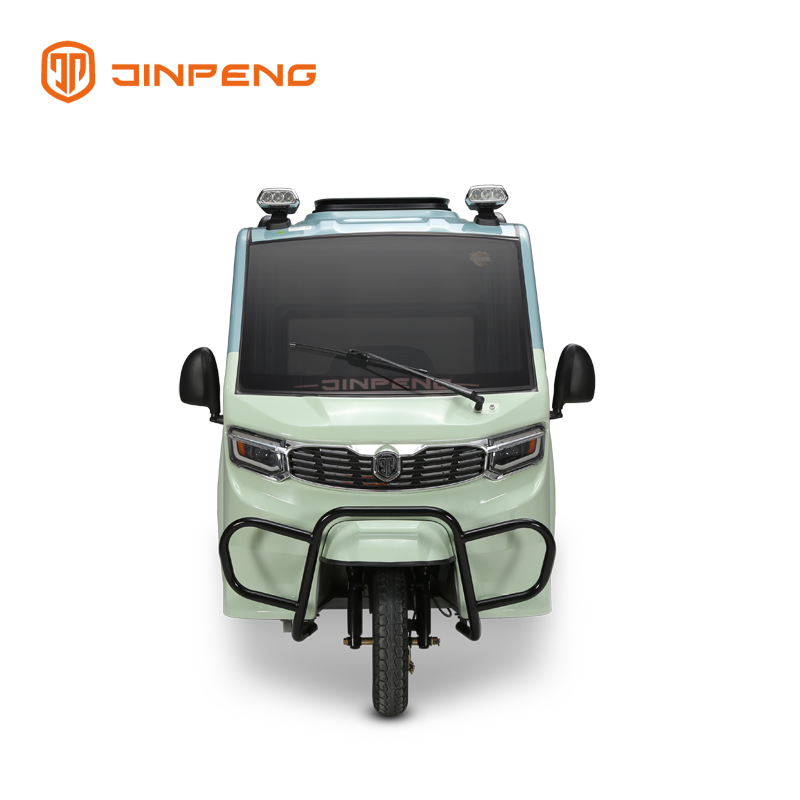
Material Demands: Cargo Hauling vs. Passenger Transport
Dead Weight vs. Live Weight
Engineering requirements shift drastically based on what you transport. Cargo represents dead weight. It features a static, predictable center of gravity. Boxes do not lean into corners or shift suddenly. Therefore, cargo frames prioritize outright vertical load bearing. Human passengers represent live weight. People move, lean, and adjust their seating positions constantly. This creates a shifting, unpredictable center of gravity. A frame carrying live weight must handle constant lateral stress adjustments. The chassis must compensate for uneven load distribution in real-time.
Passenger Specifics
Passenger safety dictates entirely different engineering standards. In applications like an electric passenger tricycle hg (high-grade/heavy-gauge), materials need maximum torsional rigidity. Torsional rigidity prevents the frame from twisting longitudinally. Sudden stops or evasive turns generate massive twisting forces. If a frame twists under passenger weight, the vehicle loses steering predictability. This can easily lead to catastrophic rollovers. Heavy-gauge materials prevent this dangerous flex. Passenger models utilize reinforced side-impact zones to protect occupants. Material density here is non-negotiable for safety compliance.
Center of Gravity & Stability
Weight placement profoundly influences turning stability. Heavier base materials, like dense steel, naturally lower the vehicle's center of gravity. Most chassis mass sits below the axle line. A low center of gravity can actually artificially improve turning stability. This is particularly beneficial when carrying tall, heavy payloads. Top-heavy cargo creates a pendulum effect during cornering. A heavy steel frame counteracts this upper mass. Conversely, an ultra-light aluminum frame requires careful payload balancing. If you place heavy cargo too high on a light frame, it tips easily.
The Ripple Effect: How Material Choice Impacts Operational Outcomes
Range Degradation under Maximum Payload
Material weight creates an inescapable operational trade-off. A heavy steel trike loaded to maximum capacity drains a battery exponentially faster. It simply takes more watts to move more mass. Consider two vehicles hauling the exact same 300-pound cargo load. An aluminum trike will transport that cargo significantly further. The battery dedicates its stored energy to moving the cargo, not the frame. Fleet managers must calculate this range degradation closely. Heavy frames require more frequent charging stops. This downtime directly impacts daily delivery profitability.
Braking Distance and Safety
More weight equals more kinetic energy. Heavier frame materials combined with maximum payloads dramatically alter stopping distances. When a heavy steel trike hits top speed, it requires massive friction to stop. Standard mechanical drum brakes often fail under these extreme loads. They overheat and suffer from brake fade. Consequently, heavy material builds necessitate upgraded stopping mechanisms. You absolutely require dual hydraulic disc brakes for heavy steel frames. Lighter aluminum frames exert less kinetic stress on braking systems. This makes them inherently easier to stop safely in urban traffic.
Long-Term Maintenance
Frame materials age very differently under daily operational stress. Metal fatigue accumulates over time. Electric tricycle payload capacities eventually decline if micro-fractures develop. Aluminum requires incredibly precise factory welding. Poor aluminum welds often develop micro-fractures under heavy, repeated payloads. However, aluminum never requires rust mitigation. Steel is highly susceptible to rust, especially in coastal or snowy environments. Once steel rusts, its payload capacity drops dangerously. However, a cracked steel frame is much easier to weld and repair locally. Your maintenance strategy must align with your chosen chassis material.
How to Shortlist an Electric Tricycle Payload Supplier
Sourcing reliable fleet vehicles requires strict procurement protocols. Follow these exact steps to ensure structural reliability.
- Demand Material Transparency: Never accept generic marketing terms like "premium alloy." You must demand specific metallurgical grading in writing. Require suppliers to list exact grades, such as 6061-T6 Aluminum or High-Carbon Q235 Steel. Transparency is the first sign of a legitimate manufacturer.
- Verify Weld Quality and Frame Geometry: Material strength is completely irrelevant if the joints are weak. The welds hold the payload, not just the tubes. Look for robotic TIG welding documentation. Request photos of reinforced gussets at high-stress points. Pay special attention to the rear axle junction and steering head tube.
- Ask for Dynamic Testing Data: A trustworthy electric tricycle payload supplier provides empirical data. Do not rely on stationary factory tests. Ask for data proving payload capacity over rough, uneven terrain. You need proof of dynamic load survival.
- Review Warranty Structures: Frame warranties reveal hidden truths. They show the manufacturer's true confidence in their material choices. A short warranty on a heavy-duty model signals cheap material grading. Demand multi-year frame warranties for maximum payload applications.
Conclusion
Selecting the right vehicle requires a deep understanding of physical engineering limits. There is no universally "best" material for every single application. Steel firmly wins for sheer industrial abuse and tight budget constraints. However, treated aluminum wins easily for route efficiency and range maximization. Aluminum also dominates the premium passenger transport sector due to its agility. Buyers must carefully calculate their required daily payload before purchasing. You should always factor in your local route topography and climate. Finally, always request material-specific dynamic testing data before committing to a fleet purchase. Making informed material choices guarantees long-term operational success.
FAQ
Q: Does a heavier electric tricycle automatically have a higher payload capacity?
A: No. While heavy materials like steel are strong, their own mass eats into the vehicle's total weight limit. Structural design matters as much as material weight. A well-engineered lighter frame can carry more net cargo.
Q: What is the ideal frame material for maximum range with a moderate payload?
A: Heat-treated aluminum alloys (like 6061-T6) are ideal. They significantly reduce the base weight of the trike. This allows the battery to dedicate more energy to moving the cargo rather than hauling a heavy vehicle frame.
Q: Can an electric tricycle's payload capacity be upgraded later?
A: Generally, no. Payload is a hard limit dictated by the factory frame material, axle rating, and motor torque. Exceeding this limit risks catastrophic structural failure. You cannot safely bolt on higher capacity.
Q: How do I verify the payload specifications provided by a supplier?
A: Cross-reference the listed material grade first. Inspect the gross vehicle weight rating (GVWR) thoroughly. Finally, request official documentation of third-party or internal dynamic stress testing to validate their maximum load claims.


