Commercial fleets and local businesses increasingly replace conventional vans and carts. They use electric tricycles to navigate urban emission restrictions and streamline daily operations. Many municipal districts now limit heavy diesel vehicles in city centers. Micro-mobility solutions bridge this gap seamlessly. Fleet managers face complex choices today. They must balance heavy payload needs against sensitive passenger comfort. The decision between a passenger-focused model and a cargo-focused model dictates operational efficiency. It directly impacts your regulatory compliance requirements and ultimate revenue potential.
This guide breaks down the technical capabilities, regulatory realities, and financial considerations needed to deploy these vehicles. You will learn how to confidently evaluate a passenger vs cargo electric tricycle for your specific commercial application. We explore engineering differences, battery architectures, and practical rollout strategies. Proper evaluation prevents costly procurement mistakes. You can then make data-driven decisions tailored entirely to your daily route demands and business objectives.
Key Takeaways
- Cargo tricycles optimize for payload weight and secure volume, ideal for last-mile delivery, facility maintenance, and mobile vending.
- Passenger tricycles prioritize suspension, seating safety, and aesthetic design, suited for resort transit, campus mobility, and urban micro-taxis.
- Selecting the right model requires matching daily route topography and payload demands with appropriate battery capacity and motor torque.
- Local municipal regulations often classify passenger and cargo e-trikes differently regarding bike lane access and insurance requirements.
Defining Your Commercial Objective: Moving Goods vs. Moving People
Fleet operators often miscalculate the crossover capabilities of these vehicles. They assume a single platform can handle both heavy freight and human transit seamlessly. This mistake leads directly to operational inefficiencies. Assessing primary daily tasks prevents over-investing in unnecessary luxury features. You also avoid under-speccing required structural durability. A vehicle designed for moving people handles weight differently than one designed for moving concrete.
We must establish the baseline structural comparison. A dedicated cargo tricycle utilizes reinforced rear axles. It features heavy-duty leaf springs to support massive static weights. Conversely, passenger variants rely on elongated wheelbases. They use enhanced hydraulic suspension systems. These upgrades ensure smooth rides over uneven pavement. Mixing these applications creates safety hazards. Putting heavy industrial parts in a passenger cab damages delicate suspension components. Placing passengers in a rigid freight box guarantees an uncomfortable, unsafe ride.
Define what a successful deployment looks like before contacting manufacturers. Clear success criteria guide your purchasing decisions. You need concrete metrics to evaluate performance.
- Cost per delivery: Measure efficiency gains in freight applications.
- Passenger satisfaction: Track comfort ratings and repeat bookings for transit services.
- Reduced vehicle downtime: Monitor maintenance frequency and repair turnarounds.
- Route completion rates: Assess whether the battery lasts through an entire shift.
Cargo Tricycle Evaluation: Capabilities and Commercial Use Cases
Engineers design freight trikes for relentless physical punishment. We focus on heavy-duty frames constructed from thick chromoly steel or reinforced aluminum. They incorporate robust front or rear loading box configurations. Manufacturers install high-torque motors specifically designed for starting under heavy loads. These specialized motors prevent burnout during steep inclines. Operators depend entirely on this rugged construction for daily reliability in harsh urban environments.
The payload and secure volume matrix dictates utility. Standard weight capacities typically range from 300 to over 500 pounds. Secure volume matters just as much as raw weight. You can select weatherproof enclosure options. These rigid boxes protect sensitive goods from rain, snow, and theft. Some units offer modular internal shelving for parcel organization. We highly recommend insulated boxes for perishable items. Active cooling systems can run off secondary battery banks.
Several high-ROI applications dominate the current commercial landscape. These use cases maximize fleet utility and replace expensive traditional box trucks.
- Last-mile parcel and food delivery: Navigate congested urban centers easily. Couriers bypass traffic jams using dedicated lanes.
- Industrial campus and facility maintenance: Carry heavy tools, PVC pipes, and replacement parts across sprawling factories.
- Mobile retail and specialized vendor carts: Deploy cold chain logistics for ice cream vending or hot food distribution.
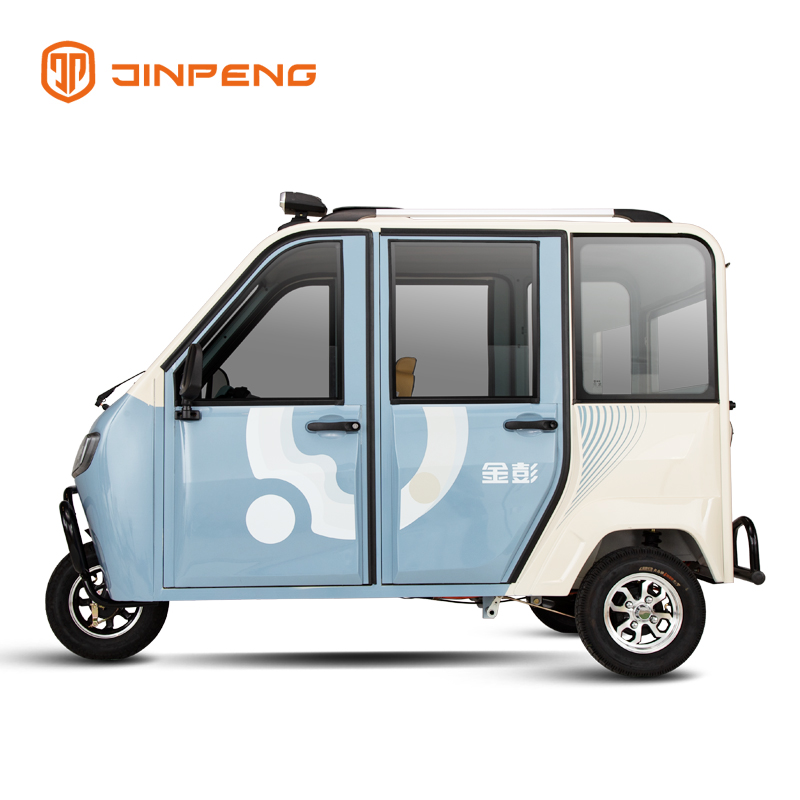
Passenger Electric Tricycle Evaluation: Capabilities and Commercial Use Cases
Passenger models prioritize ride comfort above all other metrics. Engineers utilize advanced hydraulic suspension systems. These systems absorb aggressive road shocks efficiently. Passenger safety harnesses and DOT-approved seatbelts come standard on premium models. Ergonomic ingress and egress design ensures easy boarding. Elderly passengers benefit greatly from low step-in heights and grab handles. The geometry focuses on keeping the center of gravity low and stable.
Industry standards dictate specific premium features. The HT passenger tricycle serves as a reliable benchmark. It provides enclosed, weather-protected passenger transport. Fully enclosed cabins shield riders from harsh wind and driving rain. This protection extends your operational season into the winter months. It guarantees a premium experience regardless of outside weather conditions. Features like windshield wipers, turn signals, and automotive-grade glass elevate the rider experience.
Specific industries benefit immensely from specialized passenger trikes. These applications generate consistent revenue and improve customer satisfaction.
- Hospitality and resort transportation: Move guests and their luggage across golf courses or sprawling hotel grounds quietly.
- Assisted living facility mobility: Provide safe, low-speed transit for seniors needing help navigating retirement communities.
- Urban micro-transit services: Replace outdated manual pedicabs. Offer modern, enclosed taxi services for short downtown trips.
Core Evaluation Dimensions for Fleet Procurement
Motor Output and Topography
Procurement officers must assess nominal versus peak wattage carefully. Nominal wattage dictates your continuous cruising power on flat roads. Peak wattage determines short hill-climbing bursts. Topography dictates your ideal motor choice entirely. Mid-drive motors excel on steep hills and heavy cargo routes. They leverage the vehicle's gearing system for maximum torque output. Hub motors work adequately for flat, paved passenger routes. Hub systems cost less upfront and require minimal drivetrain maintenance. You must match motor architecture to your specific local terrain to prevent overheating.
Battery Architecture and Range Realities
Maximum payload drastically reduces advertised vehicle range. Manufacturers often test range under ideal, unweighted conditions. A fully loaded freight trike consumes energy rapidly. We routinely see ranges drop by forty percent under maximum payload. You must evaluate lithium-ion versus sealed lead-acid (SLA) batteries. Lithium-ion offers higher energy density and lighter weight. SLA costs less initially but degrades much faster over time. We emphasize selecting swappable battery systems. Multi-shift commercial operations require continuous uptime. Swappable batteries eliminate long charging delays. Workers simply swap a depleted battery for a fresh one in minutes.
Maintenance, Durability, and Fleet Upkeep
Commercial deployment accelerates component wear significantly. Compare expected brake pad wear across different models. Heavy freight variants burn through mechanical disc brakes quickly. We strongly recommend dual hydraulic disc brakes for heavy fleets. Track tire replacement frequencies carefully. Commercial trikes experience uneven tire wear due to turning forces. Proprietary parts create frustrating supply chain bottlenecks. Choose off-the-shelf component availability whenever possible. Standard bicycle parts reduce repair times significantly. You keep fleets operational using local bike shop supplies rather than waiting weeks for overseas shipping. Regularly inspect drivetrain chains and spoke tension.
Table: Fleet Procurement Comparison Matrix | Evaluation Dimension | Cargo Fleet Focus | Passenger Fleet Focus |
| Suspension System | Rigid leaf springs for static weight handling. | Hydraulic dampeners for ride comfort. |
| Motor Placement | Mid-drive preferred for high torque delivery. | Hub motor sufficient for flat, quiet transit. |
| Braking Requirements | Heavy-duty hydraulic systems necessary. | Standard hydraulic systems adequate. |
| Accessory Features | Modular shelving, weather-sealed boxes. | Seatbelts, grab handles, enclosed cabins. |
Rollout Risks, Compliance, and Implementation Realities
Address the gray area of municipal e-trike legislation early. Local governments classify these vehicles inconsistently. Freight trikes often face different sidewalk and bike-lane restrictions than bicycles. Enclosed passenger models might require specific low-speed vehicle (LSV) road permits. Check local licensing mandates carefully before purchasing. Commercial insurance variations exist across different states and provinces. Underwriters view freight transport differently than human transit. You must consult your insurance broker to secure proper liability coverage.
Acknowledge driver training needs immediately. A three-wheel turning radius presents a steep learning curve. Tip-over risks increase dramatically at high speeds. Operators cannot lean into turns like they do on two-wheeled bicycles. The physics of cornering change completely. You must implement mandatory operator training programs. Conduct practice sessions in empty parking lots. Training prevents costly accidents and protects your workforce. Document all training sessions for compliance purposes.
Address infrastructure assumptions and daily charging logistics. Consider your facility's electrical capacity thoroughly. Do you need a dedicated 220V fleet charging station? Can standard 110V outlets handle overnight charging safely? Large lithium-ion batteries demand robust electrical panels. Plugging ten trikes into a single circuit will trip breakers. Smart charging stations prevent grid overloads during peak hours. Plan your infrastructure upgrades months before taking vehicle delivery.
Conclusion
The optimal vehicle choice ultimately hinges on your primary revenue-generating activity. Do not compromise passenger safety for freight utility. Do not waste payload efficiency on passenger-heavy frames. Every commercial fleet requires a highly targeted approach. Careful upfront planning prevents operational bottlenecks down the road. Matching vehicle specifications to daily tasks guarantees better performance and happier operators.
We advise procurement officers to take concrete, risk-averse steps. Request a pilot program from manufacturers. Test a single demo unit against your specific local topography. Evaluate the trike within your actual operational workflows. Gather feedback directly from your drivers. Do this before committing capital to a full fleet rollout.
Next-Step Actions:
- Audit your daily route topography and payload maximums.
- Check municipal codes for bike lane width restrictions and road access laws.
- Install appropriate electrical charging infrastructure before vehicle delivery.
- Launch a one-month pilot program with a single demo unit.
FAQ
Q: Do I need a commercial driver's license (CDL) to operate a passenger or cargo tricycle?
A: Generally, no. Most jurisdictions classify electric tricycles as e-bikes or low-speed vehicles (LSVs), which do not require a CDL. However, if the motor wattage exceeds local e-bike limits (often 750W in the US), or speeds exceed 20 mph, standard driver's licenses or specialized moped permits may apply. Always verify regional commercial regulations.
Q: Can a cargo electric tricycle operate in standard bicycle lanes?
A: It depends on the vehicle width and local municipal classifications. Many modern bike lanes accommodate standard cargo trikes. However, some oversized industrial models exceed the physical width limits of protected lanes. Cities may explicitly ban commercial freight cycles from designated pedestrian or commuter bike paths.
Q: What is the realistic lifespan of an electric tricycle battery in a commercial setting?
A: In heavy-use commercial settings, high-quality lithium-ion batteries typically last between 500 to 1,000 full charge cycles. For fleets operating daily under heavy loads, expect optimal battery performance for 1.5 to 3 years. Frequent deep discharges and extreme weather exposure will accelerate capacity degradation.
Q: Are HT passenger tricycles street-legal for public roads?
A: HT passenger models often qualify as street-legal under low-speed vehicle (LSV) classifications. This usually requires DOT-approved lighting, mirrors, seatbelts, and a VIN for registration. They are generally permitted on public roads with speed limits of 35 mph or less, but they must follow standard motor vehicle traffic laws.


