Last-mile delivery is quickly transitioning from traditional gas-guzzling vans to agile micro-mobility solutions. Urban congestion and strict emissions regulations drive this massive operational shift. Logistics companies realize they need greener, more efficient vehicles for dense city centers. However, procurement teams often struggle when navigating this rapidly expanding market. They find it difficult to differentiate between flimsy consumer-grade e-bikes and genuine commercial-grade fleet tricycles. Making the wrong choice frequently leads to costly downtime and stranded delivery assets.
This article provides a rigorous, decision-stage framework for evaluating commercial tricycle models. We will help you vet manufacturing partners based on reliability, scalability, and long-term performance. You will learn how to align vehicle specifications with your unique operational realities. Our goal is to ensure your fleet transitions smoothly to micro-mobility without sacrificing delivery volume. We focus heavily on practical metrics, infrastructure planning, and effective procurement strategies.
Key Takeaways
- Evaluating load capacity and battery range must be tied directly to specific route topography and daily delivery volume, not just isolated spec sheets.
- Choosing an electric cargo tricycle supplier requires auditing their parts supply chain, warranty fulfillment, and local regulatory compliance.
- Successful deployment hinges on pilot testing specific commercial models (like the JBU150 electric cargo tricycle) before committing to fleet-wide rollout.
- Infrastructure planning (charging, depot space, and maintenance workflows) must happen concurrently with vehicle procurement.
Defining Fleet Requirements: Payload, Range, and Route Topography
Procurement teams must align vehicle specifications with strict operational realities. Manufacturers often advertise impressive maximum range claims. These numbers look great on a spec sheet. However, they frequently fall short in real-world delivery scenarios. You must factor in your actual daily payload weight. Frequent stop-and-go usage drains batteries significantly faster than continuous cruising. Cold weather also drastically reduces available battery range. We recommend discounting manufacturer range claims by at least twenty percent for realistic route planning.
Understanding the difference between volumetric capacity and physical weight is crucial. Parcel volume and heavy goods weight represent two entirely different metrics. A large cargo box offers massive cubic space. It perfectly accommodates lightweight e-commerce parcels. It might not support the dense weight of liquid goods or mechanical parts. You should match cargo box dimensions to your standard fleet tote sizes. This strategy maximizes per-trip efficiency and prevents overloaded axles.
Initial unit cost only tells a fraction of the fleet economics story. You must account for long-term lifecycle variables. Battery replacement cycles dictate a significant portion of future expenses. Brake pads and tires wear out quickly under heavy commercial loads. Daily charging logistics require careful grid planning compared to traditional internal combustion engine vehicles. Commercial fleets need vehicles built for intense, daily abuse.
Fleet Economics and Operational Variables
| Variable |
Consumer-Grade Impact |
Commercial-Grade Impact |
| Battery Cycles |
Degrades rapidly after 300 cycles. |
Maintains 80% capacity past 800 cycles. |
| Chassis Durability |
Prone to micro-fractures under heavy load. |
Reinforced steel resists fatigue and stress. |
| Brake Wear |
Mechanical brakes require weekly adjustments. |
Hydraulic systems offer long-lasting reliability. |
| Charging Time |
Slow plug-in charging causes downtime. |
Hot-swappable batteries eliminate wait times. |
Core Technical Benchmarks for Commercial-Grade E-Tricycles
Commercial delivery applications demand incredibly robust powertrains. You need mid-drive motors or high-torque hub motors. These specialized motors handle heavy payloads on steep urban gradients. Weak motors will overheat and burn out quickly under commercial strain. We advise selecting systems designed specifically for constant stop-and-go momentum. High torque ensures the vehicle can accelerate safely from a dead stop while fully loaded.
Battery architecture plays a critical role in your fleet uptime. Hot-swappable batteries are highly essential for commercial success. They eliminate expensive fleet downtime completely. Riders can swap depleted batteries for fully charged ones in seconds. This eliminates depot charging bottlenecks. It effectively extends your operational hours around the clock. You no longer need to park a vehicle for six hours just to recharge it.
Let us analyze the JBU150 electric cargo tricycle as a commercial standard benchmark. It highlights a precise balance of reinforced chassis design. It offers an optimal payload-to-weight ratio for urban logistics. Fleet-ready suspension systems handle deep city potholes effortlessly. Vehicles like this model prove they can withstand daily commercial punishment. They maintain stability even when the rear cargo box is filled to maximum capacity.
Protecting your operators and cargo requires advanced safety systems. You must require hydraulic disc brakes for reliable, heavy-duty stopping power. Integrated LED lighting ensures maximum visibility during early morning or night shifts. Stability mechanisms remain non-negotiable. Look for tilt technology or widened, reinforced rear axles. These features prevent dangerous tipping during sharp turns or sudden evasive maneuvers.
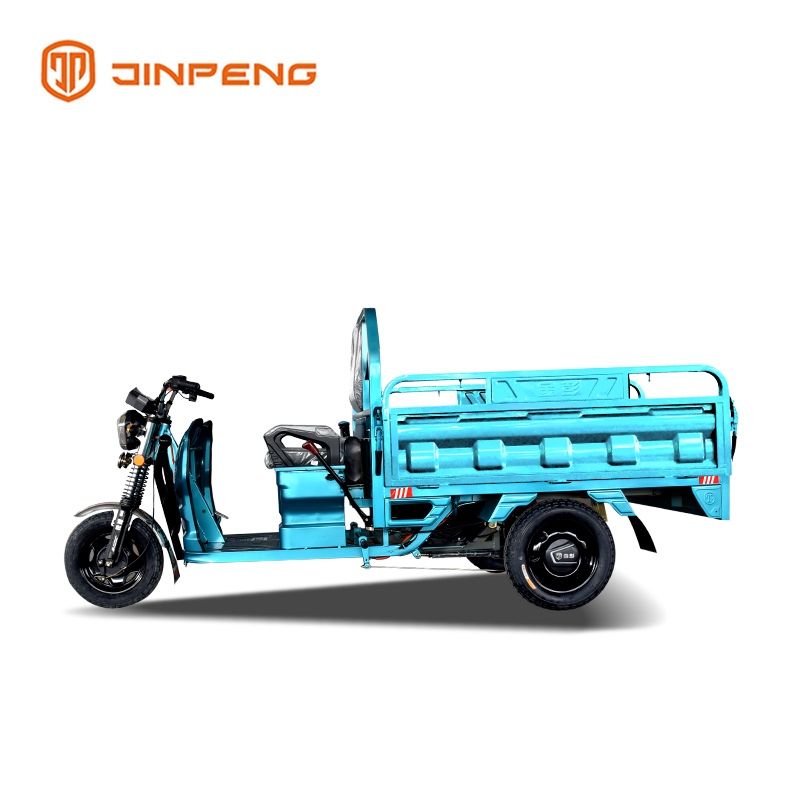
Vetting an Electric Cargo Tricycle Supplier: Compliance and Support
Finding the right manufacturing partner dictates your long-term success. You must ensure their vehicles meet local road-legal classifications. Check for strict regulatory homologation. This includes European L-category rules or specific US Department of Transportation regulations. Municipal e-bike speed and wattage limits vary widely between cities. A reputable electric cargo tricycle supplier will provide comprehensive documentation proving full legal compliance.
Waiting for proprietary replacement parts causes massive fleet failures. You cannot afford to ground vehicles for weeks. Establish strict Service Level Agreements before purchasing. You need guaranteed spare parts availability and fast shipping times. Evaluate their local warehousing footprint carefully. A trustworthy partner maintains robust inventory for critical wear-and-tear components like brake pads, motor controllers, and spare wheels.
Procurement teams should heavily scrutinize manufacturing quality and certifications. Look for verifiable ISO 9001 certifications. Verify their factory quality assurance processes through independent audits. Demand highly transparent supply chains for critical components. You need to know exactly where they source their lithium-ion cells. Consistent batch quality separates professional manufacturers from amateur assemblers.
Assess their overall customization capabilities early in the discussion. A competent electric cargo tricycle supplier easily modifies cargo boxes to fit your specific parcel totes. They should seamlessly integrate your chosen fleet management IoT devices and telematics directly on the assembly line. Factory-level corporate branding and custom paint matching save you substantial time and post-delivery expense.
Implementation Realities: Infrastructure and Operational Friction
Procuring vehicles represents only half of the challenge. Upgrading depot electrical grids incurs significant hidden expenses. Mass charging requires serious electrical power capacity. You might need new transformers or dedicated heavy-duty circuits. You must manage lithium-ion battery fire safety protocols rigorously. This involves installing fire-suppression cabinets and establishing strict charging station safety perimeters. Never underestimate the footprint required for battery storage.
Operator adoption requires immediate attention. Cargo tricycles handle very differently than standard bicycles or delivery vans. A fully loaded tricycle exhibits unique cornering forces. Implement mandatory, comprehensive rider training programs. Train operators on braking distances, load balancing, and blind-spot awareness. Proper education drastically reduces accident rates. It also prevents premature vehicle abuse and mechanical breakdowns.
Your maintenance routing will change dramatically. You must transition from traditional automotive mechanics to specialized e-mobility technicians. Preventative maintenance on electric motors and digital drivetrains is highly specific. Technicians need training on high-voltage systems and battery health diagnostics. Establish daily visual inspection workflows for your riders. Catching a loose spoke or a worn brake pad early saves thousands in future repair bills.
The Shortlisting and Procurement Workflow
Structuring your procurement process prevents costly sourcing mistakes. A phased, methodical approach guarantees you select the best possible vehicle and partner. Follow this structured workflow to minimize risk and maximize operational efficiency.
Phase 1: RFP Development
Demand precise technical and commercial data during the Request for Proposal stage. Vague brochures are useless for fleet procurement. Request detailed documentation.
- Ask for certified payload capacity testing results under various gradients.
- Request detailed battery degradation curves over a three-year lifespan.
- Require a comprehensive list of all proprietary parts versus standard bicycle components.
- Demand explicit warranty terms for the motor, chassis, and battery cells.
Phase 2: The Pilot Program (PoC)
Purchasing two to five units for a 90-day real-world stress test is completely non-negotiable. You cannot deploy a fleet based solely on a short test ride. Use this pilot phase to measure actual field performance.
- Test battery range degradation in cold weather or heavy rain.
- Gather unfiltered rider feedback regarding ergonomics, handling, and daily fatigue.
- Measure actual payload performance versus the manufacturer's claimed capacity.
- Evaluate the supplier's responsiveness when you request emergency support during the pilot.
Phase 3: Contract Negotiation
Structure your final contracts to protect heavily against supply chain delays. Lock in your spare parts pricing early to prevent unexpected inflation. Establish crystal-clear warranty claim processes. Define exact financial penalties for missed delivery deadlines. Ensure your contract guarantees access to updated firmware and technical diagnostic software for the life of the vehicles.
Conclusion
Electric cargo tricycles have evolved from a novelty concept into a core component of the modern commercial logistics stack. They solve critical urban delivery challenges while drastically reducing carbon emissions. Procurement teams must approach this transition with a rigorous, data-driven mindset. Evaluating payload capacity, battery architecture, and supplier reliability ensures a successful deployment.
Remember that initial unit price remains secondary to supplier reliability and total vehicle uptime. A slightly cheaper tricycle becomes a massive liability if it spends weeks waiting for spare parts. Partner with manufacturers who understand commercial demands and offer robust after-sales infrastructure. We encourage fleet managers to download a comprehensive procurement checklist. Request an operational scaling consultation, or order a pilot unit today to begin stress-testing your future delivery fleet.
FAQ
Q: How long do the batteries on commercial electric cargo tricycles actually last?
A: Commercial-grade lithium-ion batteries typically last between 800 and 1,000 full charge cycles before degrading to 80% of their original capacity. For a fleet operating daily, this usually translates to two or three years of optimal operational lifespan before you should consider replacement.
Q: Do electric cargo tricycles require special licenses or insurance?
A: It depends entirely on your local municipal wattage and speed limits. Some jurisdictions classify high-powered cargo tricycles as mopeds or light commercial vehicles, requiring specific licenses and commercial insurance. We strongly advise seeking local legal consultation before deployment.
Q: What is the average lead time for a fleet-scale order?
A: You should expect realistic timelines of 60 to 120 days for a large-scale fleet order. This timeframe accounts for manufacturing, factory-level customization, ocean freight shipping, and final customs clearance. Always factor this lead time into your seasonal logistics planning.
Q: Can existing fleet telematics software integrate with these vehicles?
A: Yes. Commercial-grade models typically feature open API IoT devices. These systems allow seamless integration with your existing fleet management software. You can easily track real-time GPS location, monitor battery health, and analyze rider behavior from your current dashboard.


