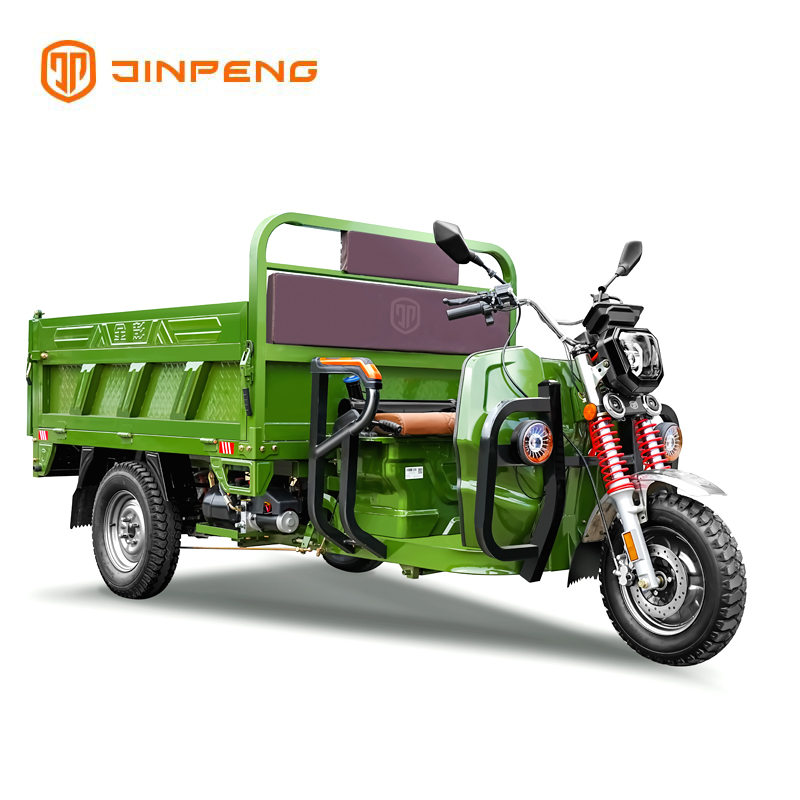
Urban delivery fleets face a compounding crisis today. Congestion charges, parking fines, and strict emissions regulations are mounting rapidly in major city centers. Traditional vans are becoming highly unsustainable for navigating dense urban routes. Finding loading zones wastes immense time. The global transition to micromobility is accelerating rapidly to solve these exact logistics bottlenecks.
However, choosing the right hardware dictates your operational success. This decision determines whether your fleet achieves high delivery rates or faces constant maintenance downtime. Selecting an optimal electric cargo tricycle requires moving far beyond basic marketing estimates. Fleet managers must rigorously evaluate total payload dynamics.
You must prioritize commercial-grade durability across all vehicle components. You also need to assess your depot charging infrastructure and local regulatory compliance. By understanding these technical pillars thoroughly, fleet operators can confidently scale their logistics network. You will keep riders safe and maximize daily drop rates.
Key Takeaways
A commercial electric tricycle bridges the gap between electric vans (high capacity, low agility) and two-wheel e-bikes (high agility, low capacity).
Payload evaluation must balance volume (cubic space) with weight capacity and motor torque.
Swappable battery architectures are critical to eliminating vehicle downtime in multi-shift delivery operations.
Accurate TCO (Total Cost of Ownership) modeling must include commercial-grade maintenance cycles (brakes, drivetrains, tires) alongside operational savings.
Why Fleets Are Shifting to the Three Wheel Cargo EV
Urban logistics networks are abandoning traditional delivery vans. Electric vans struggle immensely in high-density city centers. They require scarce parking spaces to unload parcels safely. They lack route flexibility during heavy traffic congestion. Furthermore, commercial van drivers often require specialized licenses. These requirements shrink the available hiring pool significantly.
Conversely, a three wheel cargo EV easily navigates these high-density zones. It bypasses traffic jams by utilizing designated bike lanes. Riders can park directly on wide sidewalks or dedicated loading zones. This eliminates the block-circling behavior typical of van drivers. It speeds up the final delivery significantly.
Fleet operators also face the choice between two-wheel and three-wheel options. Standard cargo e-bikes work well for light personal tasks. However, commercial logistics require robust platforms. Tricycles dramatically outperform standard two-wheel e-bikes here. Two-wheelers become highly unstable when loaded heavily. They risk tipping over during slow maneuvers.
Tricycles provide superior rider stability inherently. They stay upright independently at stoplights. This eliminates the need for riders to balance heavy loads constantly. Tricycles handle significantly higher weight limits safely. Operators experience vastly reduced physical fatigue. This is crucial during frequent start-stop delivery routes.
Increased hourly drop rates: The vehicle must allow drivers to complete more deliveries per hour.
Zero-emission compliance: The vehicle must meet all local environmental standards to enter clean air zones freely.
High operational uptime: The vehicle must remain in service rather than sitting in repair shops.
Core Specifications: Evaluating the Cargo Delivery Trike
Evaluating commercial hardware requires deep technical scrutiny. You must match the vehicle specifications precisely to your daily cargo profile.
Payload Capacity: Weight vs. Volume
Fleet operators must differentiate between carrying dense goods and high-volume goods. Beverage distributors and tool suppliers transport highly dense, heavy items. They require robust frame materials and high absolute weight capacities. Parcel couriers and food delivery services transport lightweight, bulky items. They require maximum cubic volume. You must ensure your cargo box dimensions match your typical load profile. Buying a high-weight capacity frame does not help if your cargo box runs out of physical space.
Motor Torque and Placement
Electric motor design impacts performance dramatically. Most commercial fleets prefer mid-drive motors over rear hub motors. Mid-drive motors mount directly at the pedals. They leverage the vehicle's mechanical gearing system directly. This provides vastly superior torque management for heavy loads.
Hub motors spin independently inside the wheel. They frequently overheat on steep hills when hauling heavy cargo. You must check the motor's Newton-meter (Nm) torque rating. High Nm torque is an absolute necessity for commercial use. It ensures the vehicle can conquer steep urban inclines effortlessly when fully loaded.
Commercial-Grade Braking Systems
Braking power is a non-negotiable safety requirement. A fully loaded cargo delivery trike carries immense momentum. You must insist on hydraulic disc brakes exclusively. Hydraulic fluid pushes the brake pads evenly and forcefully. This provides immediate stopping power. Mechanical cable brakes degrade far too quickly under commercial stress. The steel cables stretch over time. They require constant manual adjustment and risk sudden snapping under heavy loads.
Suspension and Chassis
Urban infrastructure punishes delivery vehicles continuously. Cobblestone streets, potholes, and speed bumps cause severe vibrations. Frame rigidity is essential to prevent structural cracking. You also need heavy-duty suspension systems. Front suspension forks protect the rider's wrists and shoulders. Rear suspension systems protect fragile cargo. Good suspension prevents parcels from bouncing aggressively inside the cargo box.
Specification Comparison Chart
Component
Standard E-Bike Grade
Commercial Cargo Grade
Motor Type
Rear Hub Motor
Mid-Drive Motor
Torque Rating
40 - 60 Nm
85 - 120+ Nm
Braking System
Mechanical Disc Brakes
4-Piston Hydraulic Disc Brakes
Suspension
Rigid / Basic Front Fork
Heavy-Duty Front & Rear Shock Absorbers
Battery Architecture and Fleet Charging Logistics
Power management determines your actual delivery capacity. Poor battery planning grounds fleets rapidly.
Real-World Range vs. Advertised Range
Manufacturers often advertise highly optimistic range capabilities. They test vehicles on flat test tracks carrying empty boxes. Fleet managers need a more realistic calculation framework. You must factor in your maximum payload weight. Stop-and-go driving patterns drain lithium-ion batteries significantly faster than continuous cruising. Cold weather environments also cause severe battery degradation. Winter operations routinely reduce effective range by thirty percent. Always calculate your route requirements using conservative range estimates.
Plug-in vs. Swappable Batteries
Continuous fleet operations cannot tolerate long charging delays. Waiting four hours for a vehicle to charge destroys operational efficiency. We strongly argue for swappable battery architectures. Swappable systems completely decouple charging time from vehicle availability.
When a battery runs low, the rider returns to the local hub. They remove the depleted battery pack quickly. They slot a fully charged pack directly into the vehicle. The rider returns to the delivery route in under three minutes. This process allows fleets to run multi-shift operations flawlessly.
Depot Infrastructure
Installing charging stations involves hidden implementation realities. Fleet depots must allocate significant physical space for charging racks. You must prioritize strict fire safety compliance. Storing dozens of lithium-ion batteries poses inherent thermal runaway risks. Depots need proper ventilation and fire-suppression cabinets.
You must also evaluate your local depot's electrical grid capacity. Plugging in forty large batteries simultaneously draws immense power. Upgrading your building's electrical panel is often necessary before launching a large-scale fleet.
Form Factors: Selecting the Right Commercial Electric Tricycle Body
Vehicle geometry dictates maneuverability and loading efficiency. Fleets must select the correct frame architecture.
Front-Loader (Tadpole) vs. Rear-Loader (Delta)
A commercial electric tricycle generally utilizes one of two frame styles. Front-loaders feature two wheels in the front. We call this the tadpole configuration. This design offers excellent load visibility. The rider can see the cargo box continuously. Tadpole designs also keep the center of gravity very low. This increases cornering stability significantly.
Rear-loaders feature two wheels in the back. We call this the delta configuration. Delta frames generally offer higher volume capacity. They mimic traditional truck beds closely. They excel at supporting modular box swapping via forklifts. Delta designs are ideal for extremely bulky cargo loads.
Cargo Box Configurations
You must map the cargo box type directly to your operational need. A mismatched box ruins delivery efficiency.
Lockable Parcel Boxes: Essential for courier services. They provide security against theft during unattended sidewalk deliveries. They protect cardboard packaging from rain.
Temperature-Controlled Cold Chain: Vital for grocery and pharmaceutical logistics. These boxes require thick insulation. They also need auxiliary power connections to run internal cooling compressors continuously.
Open Flatbeds and Pick-ups: Provide maximum flexibility. They accommodate oversized, irregularly shaped items. They are perfect for localized B2B logistics, lumber delivery, or municipal maintenance tasks.
Compliance, Safety, and Pilot Implementation Risks
Deploying new hardware requires careful risk management. Regulatory landscapes vary drastically across different regions.
Navigating Local Regulations
Fleet operators must address legal gray areas proactively. Motor wattage limits present the biggest regulatory hurdle. The European Union and the United Kingdom strictly cap motor output at 250W for legal e-bike classification. They also mandate pedal-assist operation only. Conversely, the United States allows much higher wattage limits legally. Some US states permit 750W motors equipped with independent throttles.
You must ensure your chosen vehicles comply with local municipal codes. Non-compliant vehicles risk immediate impoundment. You must also verify bike lane access regulations. Wide delivery trikes may face restrictions on narrow pedestrian-shared paths.
Rider Ergonomics and Safety
Retaining qualified delivery riders is difficult. Good vehicle ergonomics directly improve rider retention. Operators spend entire shifts navigating tough urban environments. Weather canopies are crucial investments. They protect operators from harsh rain and intense sun exposure.
Ergonomic seating prevents chronic lower back pain. You should invest in suspension seat posts and highly adjustable handlebars. Visibility features keep riders safe in heavy traffic. Bright LED lighting systems, turn signals, and wide-angle mirrors are essential. A safe, comfortable rider operates far more efficiently.
Structuring a Pilot Program
Never scale a new fleet immediately. You must structure a controlled pilot program first. Launch a test phase using a small batch of vehicles. Geofence a dense urban route for the test parameters. This keeps the vehicles close to the depot.
Track your hourly drop-rate KPIs obsessively. Compare these metrics against your traditional van performance. Most importantly, gather daily feedback from your riders. They will identify mechanical flaws or ergonomic issues quickly. You must avoid the common trap of scaling up operations before fully proving your depot-level charging logistics.
Conclusion
Urban logistics face strict environmental and spatial limitations. An electric cargo tricycle serves as a highly efficient, high-yield asset to conquer these challenges. You simply need to match the hardware correctly to your specific route density and payload profiles. Proper planning ensures seamless daily operations.
Fleet managers should take immediate action to optimize their networks. Audit your highest-density delivery routes today. Map out your depot capabilities to ensure sufficient electrical grid capacity. Request commercial demo units directly from manufacturers. Launch a controlled pilot program to test real-world payload dynamics and swappable battery efficiency.
FAQ
Q: Do riders need a special license to operate a commercial electric tricycle?
A: In most regions, operators do not need a standard motor vehicle driver's license. Vehicles capped under specific wattage limits usually classify legally as bicycles. However, you must verify your local municipal codes before deployment. E-assist classifications vary widely between Europe, Asia, and North America.
Q: How does severe weather impact electric cargo tricycle operations?
A: Cold weather drains lithium-ion batteries rapidly, reducing your effective range. Heavy rain or snow also impacts tire traction significantly. Fleet managers must equip vehicles with heavy-duty all-weather tires. Adding rider canopy options ensures operator safety and comfort during harsh rainstorms.
Q: What is the expected lifespan of a commercial cargo trike?
A: A high-quality commercial chassis easily lasts five to ten years under daily B2B use. However, consumable parts degrade much faster. Battery packs usually require replacement after roughly 1,000 charge cycles. You must also replace brake pads and drivetrain chains frequently.
Q: Can an electric cargo tricycle handle steep hills when fully loaded?
A: Yes, provided the vehicle utilizes appropriate mechanical gearing. High-torque mid-drive motors easily overcome steep gradients. They leverage the bike's mechanical gears directly to maintain forward momentum. Standard hub motors generally struggle and overheat on steep inclines when carrying maximum payload capacities.
Beneath the Tianshan Mountains in June, sweet fruits fill the air and bustling business exchanges thrive. On June 25, 2026, the 9th China-Eurasia Expo grandly kicked off in Urumqi, Xinjiang. As an influential comprehensive international event along the Belt and Road Initiative, this year’s expo hit
From May 26 to 29, the highly anticipated "Comprehensive Upgrade, Leading the Future with Intelligence" JP Group 2026 Business Summit & New Product Launch grandly kicked off at Xiamen International Expo Center.