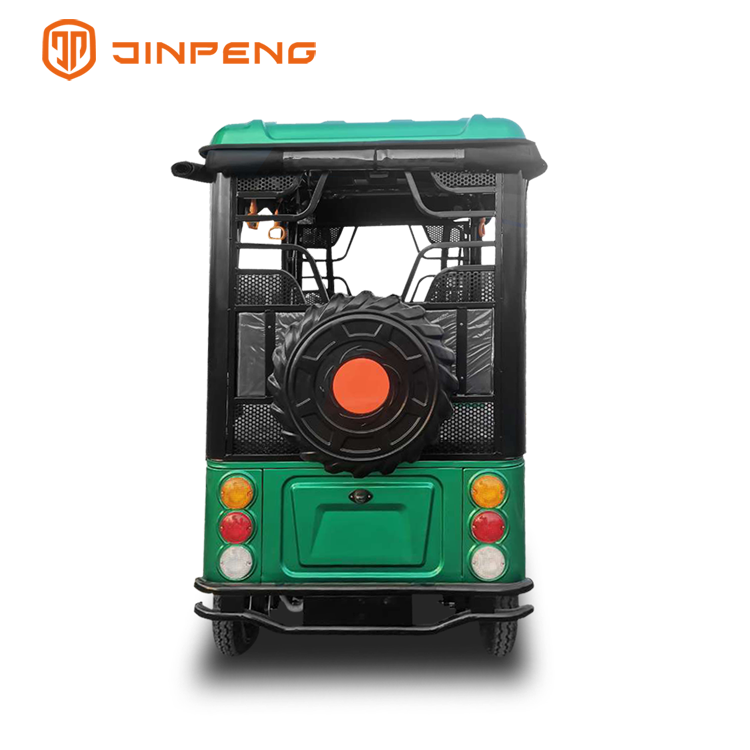
The electric three-wheeler market remains heavily saturated today. You will easily find countless models flooding showrooms everywhere. Many look technically identical on the surface. Heavy marketing often obscures the real mechanical differences. This makes procurement incredibly risky for independent drivers. Fleet operators face similar dangers when scaling up operations. You might quickly fall into a common purchasing trap. Buyers often over-index on the upfront sticker price alone. They frequently ignore long-term operating expenses, battery chemistry, and post-sale support. We offer a reliable solution for your procurement process. You need an objective, engineering-based evaluation framework to guide decisions. We will help you analyze core specs accurately. You will learn to validate manufacturer range claims confidently. Finally, you will discover how to select a reliable manufacturing partner to ensure fleet success. This structured approach guarantees a better return on your investment.
Key Takeaways
TCO Over Price: A true comparison requires evaluating battery lifespan and daily charging costs, not just the initial purchase price.
Spec Sheet Reality Check: Payload capacity and motor torque dictate real-world performance much more than theoretical top speeds.
Battery Mathematics: Understanding the "electric rickshaw wh" (Watt-hours) rating is non-negotiable for predicting accurate daily range.
Vendor Viability: Evaluating an "electric rickshaw supplier" requires checking homologation certificates, spare parts availability, and warranty terms.
Defining Success: Operational Economics vs. Upfront Sticker Price
Shift your comparison away from standard capital expenditure. Operating expenditure dictates your actual fleet success. You must evaluate daily running expenses meticulously. Electricity costs matter significantly more than the initial purchase price. Traditional auto-rickshaws rely on expensive, price-volatile fossil fuels. An electric rickshaw offers massive per-kilometer cost savings. We see performance data proving these electric savings daily. You only pay for local electricity rates. This operational model easily outperforms fluctuating petrol or diesel prices.
Local electricity rates fluctuate across different regions. You must calculate charging costs based on commercial power tariffs. Compare this directly against rising petrol prices. A fleet of ten vehicles multiplies these savings exponentially. Your daily operational budget drops significantly.
You must look beyond the initial dealership invoice. Hidden costs often destroy vehicle profitability over time. You must identify battery replacement cycles early. Lead-acid batteries degrade fairly quickly under heavy commercial use. You typically swap them every eight to twelve months. Frequent replacements drain your maintenance budget rapidly. They directly impact your three-year operational profitability. Compare these replacement cycles carefully before buying any vehicle. A cheaper vehicle might cost thousands more in replacement parts. Smart buyers focus on long-term cash flow preservation.
Demystifying Core Electric Rickshaw Specifications
Battery Chemistry and Capacity (The "Wh" Factor)
Lead-acid and lithium-ion represent the two main battery choices. Lead-acid offers a much lower initial procurement cost. It remains popular for strict budgets and light usage. However, lithium-ion provides a vastly superior cycle life. It also delivers excellent overall weight efficiency. Lighter vehicles consume less battery power per kilometer. You get better daily performance from lithium-ion setups. Lead-acid batteries handle roughly 400 charge cycles before degrading. Lithium-ion packs often exceed 1,500 reliable charge cycles.
Calculating real range requires basic mathematical understanding. Do not trust generic marketing claims blindly. You must understand the electric rickshaw wh rating accurately. Watt-hours (Wh) indicate the true energy capacity inside. Multiply the battery voltage by its Amp-hours (Ah). This formula reveals the exact Watt-hour capacity. A 48V 100Ah battery equals exactly 4800 Wh. This mathematical reality separates genuine capability from brochure exaggeration. You use this number to predict your actual driving distance.
Drivetrain: Motor Power and Torque
Brushless DC (BLDC) motors dominate the modern market. They serve as the industry standard for an excellent reason. BLDC technology maximizes electrical efficiency during long shifts. These motors also require very low routine maintenance. They lack internal brushes, reducing mechanical wear significantly. You avoid frequent garage visits for motor repairs.
You must evaluate peak versus continuous power carefully. Continuous power dictates standard cruising capabilities on flat roads. Peak power handles sudden acceleration and heavy payload demands. Always check torque figures for specific commercial use cases. High-torque motors excel in hilly terrain environments. They also perform much better in frequent stop-and-go traffic. You need more torque when carrying heavy construction materials. You need less torque for lightweight passenger transport.
Chassis, Payload, and GVW
Structural integrity keeps your vehicle safe on rough roads. Manufacturers use tubular or stamped steel chassis construction. Tubular frames use thick hollow pipes. They bend slightly under heavy stress without snapping. This flexibility prevents catastrophic structural failures. Stamped steel frames use heavy press machines. They stamp solid metal sheets into rigid shapes. This provides excellent rust resistance. It also creates a uniform exterior finish. Both methods work well for specific environments. Choose tubular frames for rough rural roads. Choose stamped steel for paved urban streets.
Gross Vehicle Weight (GVW) determines your physical limits. It combines vehicle weight plus passenger or cargo payload. High payloads increase battery drain significantly during operation. They also intersect closely closely local road compliance laws. Overloading reduces your effective driving range very quickly. It stresses the motor and degrades the battery faster. You must match the GVW rating to your actual cargo.
Real-World Mileage vs. Brochure Claims: Mitigating Range Anxiety
The "standard conditions" fallacy misleads many new buyers. OEM-tested ranges rarely match real-world street conditions. Manufacturers test vehicles on perfectly flat indoor tracks. They use minimal payloads during these ideal testing scenarios. You will drive in much harsher daily environments. Expect your actual mileage to drop considerably.
Several variables impact your actual mileage directly. Payload weight sits at the top of this list. Heavy loads force the motor to work much harder. Low tire pressure creates unnecessary rolling resistance constantly. Road gradients demand extra peak power from the battery. Frequent braking wastes your forward momentum repeatedly.
Tire pressure management requires daily attention. Under-inflated tires create massive drag. The motor pulls extra battery power continuously. This unnecessary drain shortens your daily range. You lose up to fifteen percent of your capacity. Train your drivers properly. They must check tire pressure every morning.
Table 1: Standard Testing vs. Real-World Variables
Performance Variable
OEM Standard Testing Conditions
Real-World Street Conditions
Payload Carrying Weight
Only the test driver (approximately 75 kg)
Driver plus full cargo or passengers (300+ kg)
Road Surface & Terrain
Perfectly flat, smooth testing track
Potholes, speed bumps, and steep hills
Tire Pressure Management
Optimal laboratory pressure
Often under-inflated in daily commercial use
Driving Stops & Starts
Continuous driving without interruption
Frequent stop-and-go city traffic
Charging infrastructure realities also demand your immediate attention. Assess the onboard charger quality before signing anything. Standard charging times vary wildly between vehicle models. Fast-charging Li-ion packs minimize your daily operational downtime. Slow-charging lead-acid batteries require dedicated overnight parking spots. You must also consider your local grid stability. Frequent power outages disrupt overnight charging schedules easily.
How to Vet an Electric Rickshaw Supplier
Homologation and compliance protect your business operations. You must ensure the supplier passes local regulatory testing. Institutions like ICAT or ARAI in India set standard rules. Approved models help you avoid massive legal liabilities. They also ensure you can secure proper commercial insurance. Uncertified vehicles face sudden impoundment by local authorities.
Warranty transparency reveals a supplier's true confidence. Always read the fine print carefully before purchasing. Look closely at battery degradation clauses and exclusions. Understand the exact motor warranty terms thoroughly. Some warranties expire automatically if you miss scheduled maintenance. You need clear documentation protecting your fleet investment.
Battery warranties often hide complex exclusions. Consider these vital points during procurement:
Many suppliers promise three-year coverage but bury cycle count limits.
They might deny claims if capacity drops naturally over time.
Look for warranties guaranteeing seventy percent capacity retention.
Ensure the motor warranty covers unexpected water damage.
Heavy rain often ruins poorly sealed electrical controllers.
After-sales support defines long-term viability for operators. Assess the local service network meticulously before committing. A cheap import quickly becomes a massive business liability. Imagine waiting three weeks for a replacement motor controller. Finding a reliable electric rickshaw supplier prevents these expensive delays. Check their spare parts inventory directly at their local depot.
The Shortlisting Framework: Matching Specs to Your Duty Cycle
You need a systematic approach for fleet procurement. Follow these exact steps to find the perfect match. This structured framework removes emotional bias from your purchase.
Step 1: Define the Use Case. Differentiate between passenger transport and last-mile cargo. Passenger models need a strict comfort and safety focus. Cargo models require a dedicated payload and torque focus.
Step 2: Establish the Daily Distance. You must match the electric rickshaw specifications to your exact route length. Do this without relying on midday opportunity charging. Ensure the battery capacity covers the entire daily shift.
Step 3: Mandate Pilot Testing. Fleet buyers must mandate rigorous field tests. Run a trial for at least seven consecutive days. Load the vehicle fully during these tests. Track the battery discharge rate carefully. Monitor driver fatigue levels daily. Ask drivers for honest handling feedback.
Compare these real-world results against brochure promises. Place bulk orders only after verifying performance.
Chart 1: Procurement Decision Matrix
Duty Cycle Requirement
Primary Specification Focus
Recommended Battery Choice
Passenger Comfort (City)
Suspension quality, seating capacity
Lithium-ion (Long daily range)
Heavy Cargo Transport
High torque motor, reinforced chassis
Lead-acid or High-capacity Li-ion
Short Last-Mile Delivery
Agility, quick charging support
Lithium-ion (Fast charge support)
Conclusion
Comparing electric rickshaws remains an exercise in careful balancing. You must balance daily battery economics against structural durability. You also need to verify vendor reliability thoroughly. Focus entirely on operating realities rather than brochure promises.
We recommend requesting detailed spec sheets immediately. Focus heavily on Wh ratings, GVW limits, and motor wattage. Obtain official warranty documents from at least three shortlisted suppliers. Compare the exact components side by side. Complete these comparisons before ever requesting a physical test drive.
FAQ
Q: What are the most important electric rickshaw specifications to look for?
A: Focus heavily on the battery Wh rating for accurate range. Check the motor BLDC rating for torque and efficiency. Finally, verify the structural GVW to ensure it safely handles your expected daily payload.
Q: How do I verify the range of an electric rickshaw before buying?
A: You must do the math manually. Find the total Watt-hours by multiplying Voltage by Ah. Divide those Watt-hours by your estimated consumption per kilometer. Always factor in your maximum payload, as heavy loads increase consumption.
Q: What makes a reliable electric rickshaw supplier?
A: A reliable supplier enforces warranties transparently. They maintain a robust local spare parts inventory. They also hold proper regulatory certifications, proving their vehicles meet national safety and quality standards.
Q: Is it better to choose Lithium-ion or Lead-acid batteries?
A: Lead-acid works well for strict budgets and low daily utilization. Lithium-ion costs more upfront but provides superior long-term ROI. Choose Lithium-ion for high daily mileage and longer overall battery lifespans.
Beneath the Tianshan Mountains in June, sweet fruits fill the air and bustling business exchanges thrive. On June 25, 2026, the 9th China-Eurasia Expo grandly kicked off in Urumqi, Xinjiang. As an influential comprehensive international event along the Belt and Road Initiative, this year’s expo hit
From May 26 to 29, the highly anticipated "Comprehensive Upgrade, Leading the Future with Intelligence" JP Group 2026 Business Summit & New Product Launch grandly kicked off at Xiamen International Expo Center.