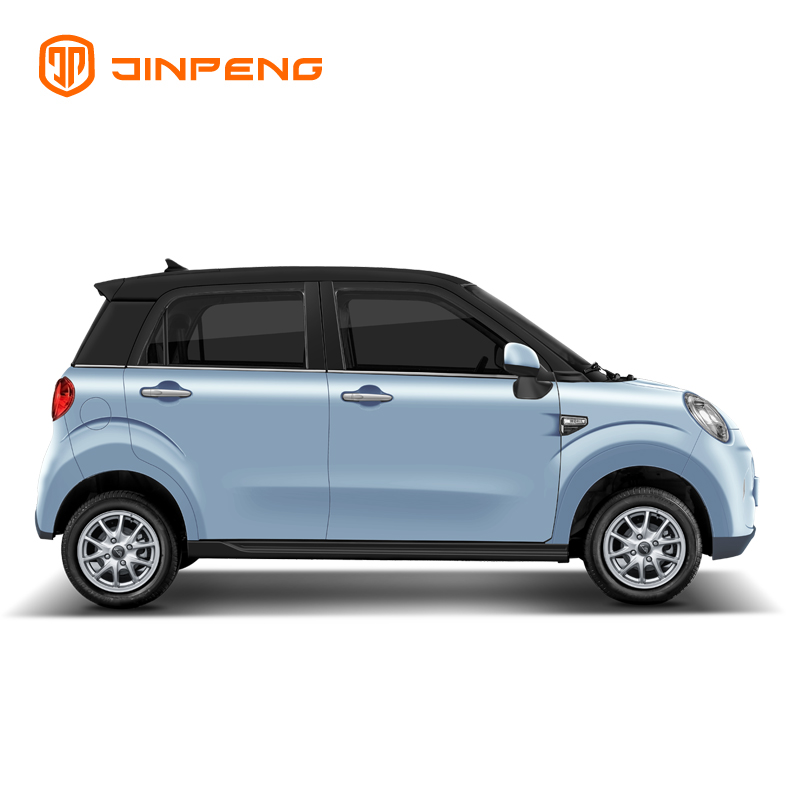
Sourcing electric vehicles for distribution or fleet use brings incredibly high stakes. A single wrong decision can leave you holding stranded assets. It can also cause severe compliance failures. You face a major challenge when evaluating these vehicles. Manufacturer spec sheets often present ideal-condition data. They highlight NEDC or WLTP range estimates rather than real-world performance metrics. This makes separating marketing hype from engineering reality quite difficult.
We wrote this guide to solve this exact problem. You will discover an evidence-based evaluation framework. We focus strictly on buyer needs. You will learn how to filter out low-tier manufacturers. We will help you identify reliable vehicles engineered for highway stability. By mastering these exact specifications, you can secure models built for long-term operational success.
Key Takeaways
Performance vs. Efficiency: Prioritize continuous power output and thermal management over peak horsepower to ensure highway stability.
Battery Reality: Look beyond raw kWh; evaluate battery chemistry (LFP vs. NMC), cycle life, and real-world range under HVAC load.
Compliance & Safety: Homologation standards, specialized EV tires, and braking systems must match regional highway regulations.
Supplier Viability: Sourcing success relies heavily on your high speed electric car supplier’s aftermarket support, warranty terms, and spare parts availability.
Defining the Baseline: What Qualifies as a "High Speed" EV?
Before diving into complex specifications, we must establish a clear definition. You need to know exactly what separates a true highway-capable vehicle from a neighborhood cruiser. Legal definitions vary by country. However, specific engineering thresholds remain consistent worldwide. You must understand these boundaries to make smart sourcing decisions.
Regulatory Thresholds
Many buyers confuse Low-Speed Electric Vehicles (LSEVs) with highway-capable vehicles. Authorities legally restrict LSEVs to top speeds of 25 to 35 mph. They often lack mandatory crash-testing certifications. A true high speed electric car must sustain speeds of 65+ mph (105+ km/h). It must also meet stringent structural and safety standards. Securing highway legal status requires passing intensive regulatory checks. You must confirm these homologation limits before importing any models.
The Power-to-Weight Ratio
You will often see intense debates about electric motor power. Many people mistakenly chase peak horsepower figures. Excessive peak power rarely translates to better everyday driving. You should focus on matching the continuous motor output (measured in kW) to the chassis weight. A heavy battery pack requires adequate continuous torque to maintain highway speeds. If a manufacturer uses a weak motor on a heavy frame, the vehicle will struggle on inclines. Balancing this ratio ensures safe overtaking and stable cruising.
Success Criteria for Sourcing
A successful vehicle sourcing strategy relies on verifiable metrics. Do not rely solely on glossy brochures. You should define your success using the following criteria:
Low Warranty Claim Rates: The vehicle must demonstrate a proven track record of minimal powertrain failures.
Local Compliance: The platform must seamlessly pass your target market’s road safety laws.
Verifiable Range: The manufacturer must provide testing data reflecting real-world HVAC usage.
Essential High Speed Electric Car Specifications to Evaluate
Evaluating an electric vehicle requires a deep dive into its core architecture. You must scrutinize the battery, motor, and thermal management systems. These components dictate how the vehicle behaves in the real world.
Battery Architecture and Real-World Range
Battery selection determines the lifespan and safety of your fleet. You cannot judge a battery solely by its total kilowatt-hours.
Chemistry & Degradation
Manufacturers generally choose between two primary battery chemistries. Lithium Iron Phosphate (LFP) offers superior longevity and enhanced thermal safety. Nickel Manganese Cobalt (NMC) provides higher energy density for longer ranges. LFP batteries withstand repeated charging cycles much better. NMC batteries suit applications requiring maximum range in a lighter package. You must align the chemistry with your specific operational needs.
Comparison of Common EV Battery Chemistries
Battery Chemistry
Energy Density
Cycle Life
Thermal Stability
LFP (Lithium Iron Phosphate)
Moderate
3,000+ cycles
Extremely High
NMC (Nickel Manganese Cobalt)
High
1,000 - 2,000 cycles
Moderate
Usable Capacity vs. Gross Capacity
Manufacturers often advertise gross battery capacity. This number is highly misleading. A battery management system locks away a buffer to prevent catastrophic degradation. You must explicitly ask the manufacturer for the usable kWh figure. The usable capacity directly determines the actual miles driven between charges.
Environmental Variables
Spec sheet ranges completely ignore environmental extremes. Continuous highway driving drains batteries rapidly due to aerodynamic drag. Cold weather also slows battery chemical reactions. Furthermore, running the cabin heater or air conditioning creates a massive continuous power draw. You should mentally deduct 20% to 30% from the NEDC or WLTP figures to calculate true operational range.
Powertrain and Motor Efficiency
The electric motor translates stored energy into physical motion. Evaluating its efficiency requires understanding power delivery curves.
Continuous vs. Peak Power
Spec sheets typically highlight peak power. However, motors can only sustain peak power for short bursts before overheating. You need to evaluate continuous power output. Continuous power dictates how well the vehicle merges onto busy highways. It also determines if the vehicle can sustain high speeds up steep gradients. A motor with high peak power but low continuous power will feel sluggish during sustained highway driving.
Inverter Technology
The inverter converts direct current (DC) from the battery into alternating current (AC) for the motor. Older systems use standard silicon components. Modern platforms utilize Silicon Carbide (SiC) inverters. SiC technology dramatically reduces energy loss during high-speed operation. It minimizes heat generation and extends highway range. You should prioritize vehicles utilizing SiC components.
Case Study/Benchmark
When evaluating different platforms, look for intelligent engineering balance. Consider how well-designed models balance motor efficiency with battery weight. For instance, the high speed electric car ec01 showcases a highly optimized powertrain. It delivers sufficient continuous output for highway commuting while remaining light enough for efficient urban driving. This precise engineering balance represents the gold standard for reliable sourcing.
Charging Standards and Thermal Management
Fast charging capabilities dictate vehicle uptime. You must look beyond simple marketing claims about charging speeds.
Fast-Charging Curves
Many manufacturers boast about charging from 10% to 80% in 30 minutes. You should demand to see the actual fast-charging curve. Vehicles rarely maintain their peak charging rate for long. The charging speed tapers off significantly as the battery fills up. A sustained charging curve matters far more than a brief peak rate. Flawed charging curves leave drivers waiting endlessly at public stations.
Active Thermal Management
High-speed driving and DC fast charging generate immense heat. Passive air cooling cannot handle this thermal load. You must ensure the vehicle features active liquid thermal management. Liquid cooling pumps fluid through the battery pack to extract heat. This prevents thermal throttling on the highway. It also protects the battery cells from premature degradation during frequent rapid charging sessions.
Safety, Chassis, and Component Durability
Electric vehicles carry heavy battery packs. This added mass drastically alters vehicle dynamics. You must ensure the chassis and safety systems can handle these unique physical stresses.
Structural Integrity
An EV chassis must perform two critical functions. It must protect the passengers, and it must shield the battery pack. Puncturing a high-voltage battery can cause severe fires. You should demand engineering schematics proving the presence of high-strength steel cages around the battery compartment. Look for reinforced side-sill structures designed specifically for battery impact protection.
EV-Specific Tires
You cannot use standard tires on a heavy electric vehicle. Electric motors deliver instant, massive torque. This instant torque shreds conventional rubber compounds very quickly. The extreme weight of the battery pack also requires tires with a much higher load index. Furthermore, without an engine to mask road noise, cabin acoustics suffer. True EV-specific tires feature acoustic dampening foam, low rolling resistance, and stiffened sidewalls. These specialized tires ensure stability and acceptable road noise at highway speeds.
Regenerative Braking Systems
Stopping a heavy EV traveling at 70 mph requires robust engineering. Manufacturers employ a blend of physical friction brakes and motor regeneration. The motor works backward to slow the car while capturing kinetic energy. You must evaluate how smoothly the vehicle blends these two systems. Poorly calibrated braking algorithms cause jerky stops and unpredictable pedal feel. You should thoroughly test the braking calibration during your initial sample evaluation.
Vetting Your High Speed Electric Car Supplier
Even the best engineering specifications mean nothing if the manufacturer fails to support the product. Choosing the right high speed electric car supplier makes or breaks your entire importation strategy. You must perform rigorous due diligence on their corporate infrastructure.
Supply Chain Transparency
Many vehicle brands do not manufacture their own core components. They assemble parts sourced from various sub-contractors. You need full transparency regarding component origins. Ask the supplier exactly where they source their battery cells, traction motors, and electronic controllers. Verifying the reputation of these Tier-1 component suppliers ensures the final vehicle remains reliable.
Quality Assurance & Homologation
Highway registration requires strict governmental compliance. You cannot import a vehicle lacking proper documentation. Ask your supplier for comprehensive certification dossiers. You need to see valid E-Mark, DOT, or CE certifications depending on your target region. If the supplier hesitates to provide crash test data or homologation paperwork, walk away immediately.
After-Sales Infrastructure
Electric vehicles rely heavily on complex software. Without factory support, you cannot diagnose technical faults. Assess the supplier's commitment to diagnostic software updates. You must also verify their warranty fulfillment procedures. Look for comprehensive guarantees, such as 8-year or 100,000-mile battery warranties. Finally, confirm they maintain a robust, localized spare parts inventory to prevent prolonged vehicle downtime.
Implementation Risks and Fleet Integration
Successfully importing electric vehicles involves significant logistical hurdles. You must anticipate these operational realities before finalizing large orders. Planning for these friction points prevents unexpected deployment delays.
Hidden Import & Compliance Hurdles
Moving a vehicle across borders triggers intense bureaucratic scrutiny. Customs agencies require localized testing documentation. You might face strict import quotas or mandatory safety inspections upon arrival. Securing local road-worthiness certificates often requires modifying specific vehicle components, such as lighting clusters or pedestrian warning sounds. You must research all regional compliance requirements deeply before the vehicles leave the factory.
Software and Telematics
Modern electric vehicles function like rolling computers. Many manufacturers lock down their proprietary vehicle software. This creates a massive problem if you intend to integrate the vehicles into a broader fleet management system. Closed software ecosystems prevent third-party telematics integration. You must request open API access or confirm the platform supports third-party fleet integration tools. Software lock-ins severely restrict your operational flexibility.
Maintenance Realities
Electric vehicles require far less physical maintenance than combustion cars. However, they are not maintenance-free. You must forecast accurate replacement cycles for specific components. The heavy chassis accelerates suspension wear significantly. EV tires wear out faster due to instant torque delivery. Additionally, the liquid thermal management systems require periodic coolant flushes to prevent pump failures. Preparing for these physical realities ensures your fleet remains operational year-round.
Conclusion
Sourcing a highway-capable electric vehicle demands rigorous technical scrutiny. You must look far beyond standard marketing metrics. Prioritize active thermal management, robust continuous power, and appropriate battery chemistry. Ensuring regional compliance and securing robust supplier support guarantees long-term success.
We recommend a highly structured shortlisting action plan. First, request detailed engineering spec sheets from every potential manufacturer. Next, demand thorough warranty terms and third-party crash test data. Finally, order a single sample vehicle for extensive local testing. By following these precise steps, you will secure high-quality vehicles that consistently deliver safe, reliable highway performance.
FAQ
Q: What is the minimum motor power required for a high speed electric car?
A: You should focus entirely on continuous power rather than peak horsepower. For safe highway merging and sustained cruising, we recommend a minimum of 50kW continuous power. Heavier vehicles will require proportionally more continuous output to maintain high speeds on inclines without overheating the motor.
Q: How do I verify the battery specifications provided by a supplier?
A: Never accept marketing brochures as proof. To verify high speed electric car specifications, request official third-party testing reports. Demand UN38.3 transport safety certificates and ask for the specific cell manufacturer details. You should also request documentation showing usable capacity versus gross capacity.
Q: Does the high speed electric car ec01 support DC fast charging?
A: Yes, modern platforms prioritize rapid energy replenishment. Capabilities depend on your regional requirements. Vehicles generally support localized fast-charging standards, including CCS for Western markets, CHAdeMO, or GB/T for Asian regions. Always confirm the sustained charging curve data with the manufacturer.
Q: Why do high speed EVs need different tires than traditional cars?
A: Electric vehicles are significantly heavier due to the large battery packs. They also deliver massive, instant torque straight to the wheels. This instant force destroys standard rubber quickly. EV-specific tires feature reinforced sidewalls, low rolling resistance compounds, and acoustic foam to handle the weight and silence the ride.
Beneath the Tianshan Mountains in June, sweet fruits fill the air and bustling business exchanges thrive. On June 25, 2026, the 9th China-Eurasia Expo grandly kicked off in Urumqi, Xinjiang. As an influential comprehensive international event along the Belt and Road Initiative, this year’s expo hit
From May 26 to 29, the highly anticipated "Comprehensive Upgrade, Leading the Future with Intelligence" JP Group 2026 Business Summit & New Product Launch grandly kicked off at Xiamen International Expo Center.