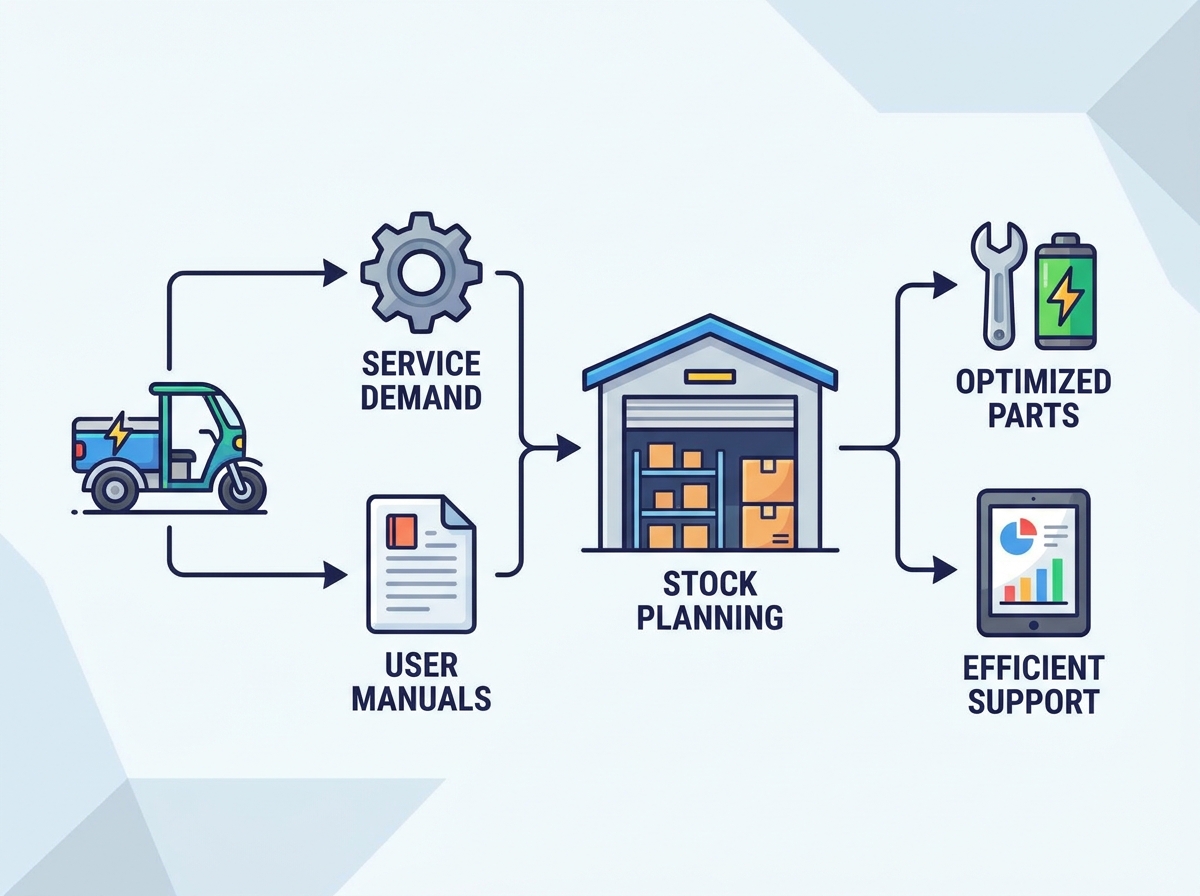
Dealerships face a constant financial tension when managing physical inventory. The hidden costs of stockouts include lost revenue, damaged reputation, and facility downtime. Conversely, overstocking dead inventory drains capital that you could otherwise use for facility expansion or marketing. Managing parts for electric mobility introduces a unique operational challenge. You must balance traditional mechanical wear-and-tear items with high-value electrical components. These specialized components remain highly sensitive to shelf life and storage conditions. A data-driven framework solves this problem directly. Classifying inventory and organizing physical storage streamline daily workflows. Forecasting demand aligns stock levels with operational cash flow. This systematic approach ensures service readiness and improves overall facility productivity. By implementing strict tracking protocols, service managers can eliminate the guesswork that leads to bloated shelves. We will break down exactly how to structure your parts department for maximum efficiency.
Prioritize ABC Classification: Allocate capital efficiently by separating fast-moving consumables (A-items) from expensive, slow-moving electrical components (C-items).
Leverage OEM Documentation: Utilize maintenance schedules found in electric tricycle user manuals to build baseline predictive forecasting models.
Mitigate Shelf-Life Risks: Implement strict First-In, First-Out (FIFO) protocols for lithium-ion batteries and controllers to prevent degradation during storage.
Integrate with Service Operations: Align parts procurement and physical parts room organization directly with electric tricycle service support workflows to minimize customer downtime and maximize service department profitability.
The Economics of Spare Parts in an Electric Tricycle Dealership
A successful inventory strategy relies on specific performance metrics. You must optimize the Inventory Turnover Ratio while maintaining a First-Time Fix Rate (FTFR) above 90%. Hitting these targets requires strict discipline on the parts counter. Dealerships selling electric tricycles often struggle to balance capital allocation with service readiness. Holding deep inventory ties up cash. Relying entirely on Just-In-Time (JIT) delivery risks severe service delays when supply chains stall. A single missing brake cable can keep a vehicle occupying a service bay for three days, blocking other profitable repair jobs.
Financial trade-offs dictate your purchasing strategy. Deep inventory ensures immediate part availability. This keeps technicians working and customers happy. However, excess stock incurs carrying costs. These costs include warehousing space, insurance, and physical depreciation. JIT delivery minimizes carrying costs but leaves your service bays vulnerable to shipping delays. A hybrid approach works best. Stock fast-moving parts heavily. Order slow-moving parts only when necessary. You want your capital working for you, not sitting in a cardboard box gathering dust on a top shelf.
Evaluating supplier relationships forms the foundation of your parts department. Manufacturer-direct parts programs offer unmatched reliability. OEM dealer programs provide long-term reorder support and clear compliance direction. Homologated parts guarantee safety and preserve vehicle warranties. Independent sourcing offers different benefits. Aftermarket wholesale cooperation often yields significant margin advantages. Dealerships must weigh these factors carefully. Using aftermarket parts for non-critical components can boost profitability. Relying on OEM channels for critical electrical components ensures safety and reduces liability. You never want to install an unverified aftermarket lithium battery and risk a thermal event in a customer's vehicle.
Categorizing Inventory: The ABC Analysis Framework
The ABC inventory classification method helps dealerships allocate capital efficiently. This framework categorizes parts based on consumption value and demand frequency. Tailoring this method to three-wheeled EVs requires understanding the specific wear patterns of these vehicles. Delivery drivers and daily commuters put different stresses on their machines, and your inventory must reflect those realities.
Category A: High-Frequency Consumables
Category A items represent the highest volume of parts moving through your service department. Identify fast-moving parts immediately. Throttle cables, inner tubes, brake pads, and tires fall into this category. These components experience constant friction and environmental exposure. Delivery drivers riding in urban environments ride the brakes constantly. A standard set of semi-metallic pads might only last a few months under heavy cargo loads.
These parts require high minimum stock levels. Automated reordering prevents stockouts and keeps service bays turning over quickly. New dealerships must focus their initial capital here. Investing heavily in Category A ensures you can handle routine maintenance profitably from day one. Stocking out of a simple brake pad frustrates customers and stalls technician workflow. You should never have to tell a customer they need to wait a week for a standard inner tube.
Category B: Moderate-Wear Mechanical and Structural Parts
Category B items experience steady but less frequent demand. Components include suspension forks, wheel bearings, and lighting fixtures. These parts degrade over time or break during minor collisions. They do not require the massive stock levels of Category A. Potholes and rough terrain will eventually destroy suspension seals, but this happens over years, not weeks.
Managing Category B requires balancing moderate demand with standard supplier lead times. You do not need dozens of suspension forks on hand. Keeping two or three in stock prevents long customer wait times. Monitor the consumption of these parts monthly. Adjust your minimum stock levels based on seasonal riding patterns and local road conditions. If your city has notoriously bad roads, you might need to bump your wheel bearing inventory up slightly.
Category C items carry the highest individual costs but fail rarely. Address motors, controllers, and battery packs carefully. These components represent significant capital investments. Storing too many of these items severely limits your operational cash flow. A single replacement motor can cost as much as fifty sets of brake pads.
The best strategy involves carrying minimal stock for Category C. Avoid tying up capital in parts that might sit on a shelf for a year. Rely instead on rapid OEM fulfillment for warranty claims. Establish expedited shipping agreements with your manufacturers. When a motor fails, you order the replacement immediately. This keeps your cash liquid while still providing a clear resolution path for the customer. Only stock these items if you manage a massive fleet contract that demands zero downtime.
Category
Part Types
Stock Level Strategy
Capital Allocation Focus
A
Tires, brake pads, inner tubes, throttle cables
High minimums, automated reordering
Primary investment for new dealerships
B
Suspension forks, bearings, lighting fixtures
Moderate minimums, manual monthly review
Secondary investment, adjusted seasonally
C
Motors, controllers, lithium battery packs
Minimal stock, JIT ordering, OEM fulfillment
Conserve capital, rely on expedited shipping
Forecasting Demand and Setting Initial Stock Levels
Translating raw data into actionable purchasing decisions separates successful dealerships from struggling ones. You must evaluate specific dimensions to forecast demand accurately. Guesswork leads to bloated shelves and empty bank accounts. Use concrete data points to build your initial stock orders. Track every single part that leaves your building to build a historical consumption profile.
Extracting Data from Electric Tricycle User Manuals
OEM documentation provides the blueprint for your inventory strategy. Detail how to map recommended service intervals to projected parts consumption. Review the maintenance schedules found in electric tricycle user manuals. Look for specific mileage markers. A 500km check usually requires brake adjustments and possible pad replacements. A 2000km service might demand new tires and suspension fluid.
Project parts consumption based on fleet size or sales volume. If you sell 50 vehicles a month, calculate when those vehicles will hit their 500km mark. Order the necessary brake pads and cables 30 days before that maintenance wave arrives. This proactive approach guarantees parts availability without holding stock prematurely. You can literally map out your purchasing calendar based on your sales floor's performance.
Calculating Minimum Order Quantities (MOQs) and Lead Times
Understanding supplier constraints prevents sudden inventory shortages. Provide a framework for calculating Reorder Points (ROP). The basic formula multiplies average daily usage by lead time, then adds safety stock. Factor in overseas shipping delays versus domestic warehouse availability. If you use five brake cables a week, and shipping takes four weeks, you need at least twenty cables just to cover the transit time.
Domestic suppliers might deliver brake pads in three days. Overseas manufacturers might take forty days to deliver specific suspension components. Adjust your MOQs accordingly. Order larger quantities of overseas parts to buffer against customs delays and port congestion. Keep domestic orders smaller and more frequent to preserve cash flow. Never let an overseas shipment drop below your calculated safety stock threshold.
Accounting for Seasonal Fluctuations
Demand rarely remains flat throughout the year. Analyze how weather and commercial usage peaks impact wear rates. Winter weather accelerates the degradation of exposed cables and brake components. Road salt and freezing rain destroy unprotected metal linkages. Summer heat increases tire wear and battery thermal stress.
Commercial usage peaks also drive parts consumption. Holiday delivery seasons force cargo trikes into heavy daily use. Fleet operators will burn through Category A consumables rapidly during November and December. Stock up on tires, tubes, and brake pads in October. Anticipating these fluctuations keeps your service department running smoothly during peak revenue periods. You do not want to run out of cargo tires two weeks before a major holiday.
Building a Resilient Electric Tricycle Service Support Infrastructure
Parts availability directly influences customer retention. Facility productivity relies on technicians having immediate access to the right components. Operational efficiency plummets when mechanics spend twenty minutes searching for a single bolt. Building a resilient infrastructure connects inventory management directly to service bay output. Your parts room should function like a surgical supply closet.
Physical Parts Room Organization and Lookup Efficiency
A chaotic parts room destroys technician efficiency. Organize the physical inventory using logical bin locations and clear naming conventions. Implement the 5S methodology: Sort, Set in order, Shine, Standardize, and Sustain. Every part must have a specific, labeled home. Do not just throw parts on a shelf. Label every shelf with an alphanumeric code. Aisle A, Shelf 3, Bin 12 becomes A-03-12.
Group parts by vehicle system. Keep all brake components in one aisle. Store electrical harnesses and lighting fixtures in another. This reduces technician lookup and retrieval times. Faster retrieval directly improves bay turnaround. When technicians complete jobs faster, the dealership processes more repair tickets daily. Use high-density storage cabinets for small items like fuses and terminal rings. Keep heavy items like replacement motors on reinforced bottom shelving near the loading door.
Aligning Parts Availability with Service Level Agreements (SLAs)
Commercial fleet clients operate under strict uptime requirements. They require guaranteed vehicle availability to run their delivery routes. Discuss how to manage these expectations. Dedicated buffer stock is necessary for commercial contracts. These clients will not tolerate a three-day wait for a standard repair.
If you service a fleet of thirty cargo trikes, you must hold specific parts in reserve. Do not sell this buffer stock to walk-in retail customers. Segregate fleet inventory to ensure you meet SLA turnaround times. Failing to meet an SLA due to a stockout can cost you a lucrative commercial maintenance contract. Keep a locked cabinet specifically for fleet-reserved components if necessary.
Streamlining Warranty Claims and Defective Parts Handling
Handling broken components requires a strict workflow. Outline the process for quarantining defective parts. Never mix defective parts with new inventory. Create a dedicated red-zone bin for warranty items awaiting OEM inspection. Tag every broken part with the corresponding repair order number and the date of failure.
Process OEM warranty claims immediately. Delaying claims ties up capital in broken parts. Replenish stock without disrupting the service queue. Excellent electric tricycle service support depends on this rapid turnaround. When a controller fails under warranty, pull a new one from stock, install it, and submit the defective unit for credit on the same day. Do not let broken parts pile up in the corner of the shop.
Inventory Management Systems and Performance KPIs
Scalability requires moving from manual tracking to scalable digital solutions. Pen and paper work for the first month. After that, manual methods cause costly errors. Improve visibility by implementing structured tracking systems and monitoring key performance indicators. You need to know exactly what sits on your shelves at any given moment.
Starting with Spreadsheets vs. Scaling to an IMS
New dealers can start with a ready-to-use spreadsheet. Structure the columns carefully. Include Part Number, Description, Supplier, Minimum Stock Level, Maximum Stock Level, and Current On-Hand Quantity. Add a column for Bin Location. Mandate that your service writers update this sheet at the end of every single shift. Deduct the parts used on that day's repair orders.
Identify the threshold for upgrading to dedicated Inventory Management Software (IMS). Once you process more than twenty repair orders a week, spreadsheets become a liability. An IMS automates deductions when a part is billed to a repair ticket. This eliminates manual data entry errors and provides real-time stock visibility. It also generates automated purchase orders when stock drops below your predefined minimums.
Essential Tracking Metrics
You cannot manage what you do not measure. Define and track essential metrics weekly. Measure Inventory Carrying Cost to understand how much capital is tied up in warehouse space and insurance. Keep this number as low as possible without sacrificing service readiness. Liquidate obsolete parts annually to keep this metric healthy.
Track your Fill Rate. This measures the percentage of customer orders fulfilled immediately from stock. Aim for a Fill Rate above 85% for Category A parts. Monitor your Stockout Rate closely. A high Stockout Rate indicates poor forecasting or unreliable supplier lead times. Adjust your Reorder Points if stockouts occur frequently. If you constantly run out of 12-volt bulbs, double your minimum order quantity.
Setting Up Automated Reorder Alerts
Manual inventory reviews waste valuable management time. Evaluate the features required in an IMS to trigger automated alerts. The system should notify the parts manager when a specific bin drops below its minimum threshold. This prevents the classic scenario of a mechanic grabbing the last brake rotor without telling anyone.
Base these alerts on dynamic lead times and historical consumption data. If brake pad usage spikes in winter, the IMS should adjust the reorder alert upward automatically. This eases the burden of manual inventory tasks. It allows your parts manager to focus on sourcing hard-to-find items rather than counting inner tubes. Automation keeps your shelves stocked while reducing administrative overhead.
Implementation Risks and Mitigation Strategies
Executing a parts strategy involves practical pitfalls. Recognizing these risks early prevents costly operational halts. Address supply chain vulnerabilities and physical storage hazards before they impact your service department. A proactive approach saves thousands of dollars in wasted inventory and lost labor hours.
The Trap of Over-Investing in Proprietary Parts
New dealerships often make a critical capital mistake. They tie up cash in highly specific, non-interchangeable parts early in the dealership lifecycle. Stocking custom body panels or unique digital displays drains funds quickly. These parts rarely fail in the first year of vehicle operation. A scratched fender does not stop a vehicle from driving, so customers will wait for that part to ship.
Advise starting lean. Focus entirely on fast-moving universal parts. Build your initial inventory around tires, tubes, brake fluid, and standard bearings. Wait for historical failure data to dictate your investments in proprietary components. Order custom parts only when a specific customer requires a replacement. Let the factory hold the inventory risk for slow-moving cosmetic items.
Managing Battery Degradation in Storage
Storing lithium batteries presents unique compliance and safety risks. Detail the mitigation steps necessary for safe warehouse operations. Batteries degrade if stored improperly. Never store a lithium-ion battery at 100% charge. Maintain a state-of-charge (SoC) between 40% and 50% for long-term storage. Use a multimeter to check the voltage of stored packs regularly.
Implement strict climate control in your battery storage area. Extreme heat accelerates chemical degradation. Extreme cold reduces capacity. Enforce strict FIFO rotation. Always sell or install the oldest battery in stock first. Monitor the SoC of stored batteries every ninety days and recharge them to 50% if they drop too low. Store all lithium packs in fire-rated safety cabinets to comply with local commercial insurance regulations.
Supply Chain Bottlenecks and Vendor Diversification
Global shipping disruptions can halt your service operations overnight. Explain how to build a resilient supply chain. Never rely on a single supplier for critical Category A and B parts. If your primary tire distributor faces port strikes, your service bays will stop generating revenue. You need backup options ready to deploy immediately.
Qualify secondary suppliers immediately. Establish accounts with multiple domestic distributors. Split your orders occasionally to keep these secondary accounts active. Vendor diversification prevents service halts during unexpected supply chain bottlenecks. It also gives you leverage to negotiate better wholesale terms. If one supplier raises their minimum order quantities, you can easily shift your purchasing volume to a competitor.
Conclusion
Successful parts management remains a strict balancing act. Dealerships must constantly weigh financial liquidity against facility productivity and operational readiness. Overstocking kills cash flow. Understocking kills customer trust. Applying a data-driven framework resolves this tension. You can maintain high service levels without bankrupting your parts department.
Your initial purchasing decisions dictate your early profitability. Summarize the shortlisting logic clearly. Start with a heavy bias toward Category A consumables. These parts turn over quickly and generate consistent service revenue. Scale your Category C investments only as historical failure data dictates. Let the actual repair tickets guide your high-cost purchases.
Take immediate action to optimize your parts department today:
Audit your current or projected sales volume to establish a baseline for parts consumption.
Extract maintenance schedules from OEM documentation to map out future service intervals.
Organize your physical bins using the 5S methodology to eliminate technician lookup delays.
Implement a foundational ABC tracking system, starting with a structured spreadsheet or a scalable IMS.
Establish accounts with at least two secondary suppliers to protect against sudden shipping bottlenecks.
FAQ
Q: What are the most commonly replaced parts on electric tricycles?
A: The most frequently replaced items are high-friction consumables. Focus your inventory on tires, brake pads, inner tubes, and throttle components. These parts wear out predictably based on mileage and require constant replenishment to keep service bays operational.
Q: How much capital should a new dealership allocate to spare parts?
A: A new dealership should typically allocate 10-15% of its initial vehicle order value to spare parts. Direct the vast majority of this capital toward fast-moving Category A consumables to ensure you can handle immediate routine maintenance profitably.
Q: How do electric tricycle user manuals help with inventory planning?
A: These manuals provide exact preventative maintenance schedules. By mapping out OEM-recommended service intervals, dealerships can predict part lifecycles and order consumables right before a wave of sold vehicles returns for scheduled service.
Q: What is the best way to store electric tricycle batteries to prevent degradation?
A: Store lithium batteries in a climate-controlled environment away from extreme temperatures. Maintain their state-of-charge between 40% and 50%. Implement a strict First-In, First-Out rotation system to ensure older stock is utilized before newer arrivals.
Q: How should I organize the physical spare parts room in my dealership?
A: Group parts logically by vehicle system. Use clear alphanumeric bin locations, visible labeling, and the 5S methodology. This reduces technician lookup time, prevents lost inventory, and directly improves overall facility productivity.
Q: How can I improve my electric tricycle service support turnaround times?
A: Turnaround times improve when parts are immediately accessible. Accurate demand forecasting, automated reorder alerts, and highly organized physical storage eliminate the time technicians spend waiting for components, drastically reducing bay wait times.
Q: Should I use OEM parts or aftermarket alternatives for my dealership?
A: OEM parts ensure warranty compliance, safety, and long-term reorder support, making them essential for critical electrical components. Aftermarket alternatives offer higher profit margins and are suitable for universal mechanical consumables like tires and standard bearings.
Beneath the Tianshan Mountains in June, sweet fruits fill the air and bustling business exchanges thrive. On June 25, 2026, the 9th China-Eurasia Expo grandly kicked off in Urumqi, Xinjiang. As an influential comprehensive international event along the Belt and Road Initiative, this year’s expo hit
From May 26 to 29, the highly anticipated "Comprehensive Upgrade, Leading the Future with Intelligence" JP Group 2026 Business Summit & New Product Launch grandly kicked off at Xiamen International Expo Center.
The transition of last-mile delivery logistics toward micro-mobility is accelerating rapidly. Urban congestion, strict emission regulations, and the constant demand for lower per-stop delivery costs drive this operational shift.
Quotation Lists Available
We have different quotation lists and professional purchasing & sales team to answer your request fast.