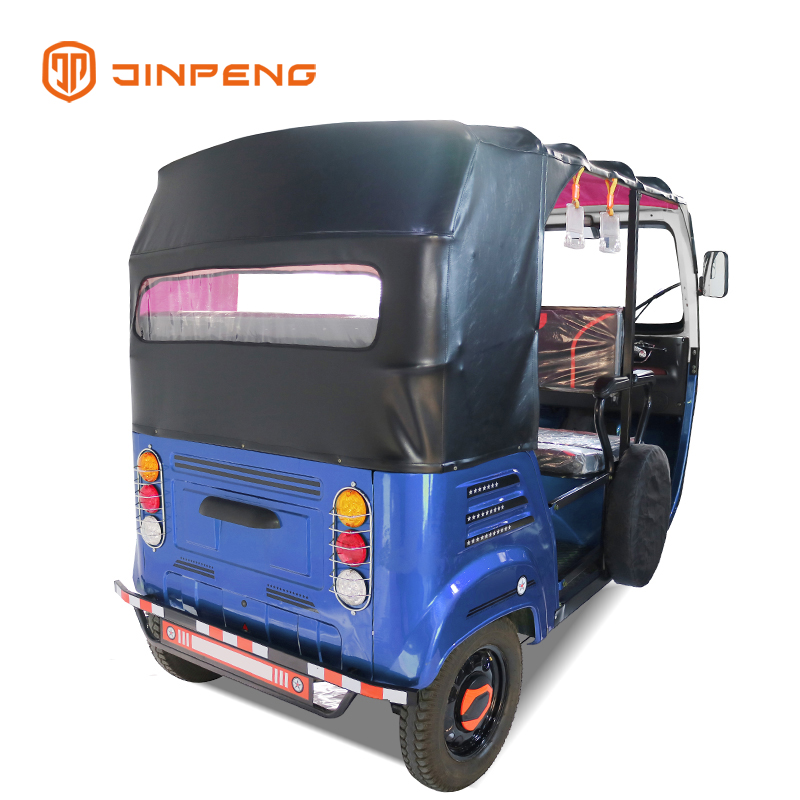
Zero-emission mobility is reshaping our urban landscapes globally. Forward-thinking municipalities and private operators urgently need sustainable solutions to bridge the notorious last-mile transit gap. Buyers face a clear problem today. They know they need a reliable three wheel passenger vehicle. Yet, they frequently struggle to choose between two distinct options. Should they select the rugged, high-capacity design of an electric rickshaw? Or should they invest in the fully enclosed, specialized comfort of a passenger electric tricycle? We designed this article to solve your specific procurement dilemma. We provide a strict, objective evaluation framework for both vehicle formats. You will understand regulatory compliance nuances, infrastructure demands, and practical use-case viability. Read on to master these operational differences and finalize your purchasing decisions with absolute confidence.
Key Takeaways
Electric Rickshaws prioritize maximum payload, rapid passenger turnover, and commercial fleet ROI (ideal for 3–6 passengers).
Passenger Electric Tricycles prioritize weather protection, passenger comfort, and localized or private transit (ideal for 1–3 passengers or family mobility).
Regulatory Variance: The choice often hinges on local municipal classifications—many zones regulate open-cab rickshaws differently than enclosed e-trikes.
Infrastructure Dependency: Both require distinct charging regimens; high-utilization rickshaws typically require battery-swapping or commercial-grade charging, while e-trikes often utilize standard overnight charging.
Defining the Business Problem in Short-Distance Mobility
Operators must strictly separate commercial ambitions from private utility. We see fundamentally different needs across these two sectors. Fleet managers look for durable, revenue-generating assets. They need vehicles capable of running twelve-hour shifts continuously. Conversely, individuals and facility managers require highly specialized transit. A resort manager prioritizes guest comfort over raw payload.
Highlighting the financial risk is crucial here. We witness severe budget overruns when buyers choose the wrong form factor. Imagine over-specifying an open-cabin model for a luxury hotel shuttle. Guests complain about wind and rain. You lose premium brand value immediately. Now imagine under-specifying an enclosed model for high-turnover public transit. The doors break from constant use. The heavier chassis drains the battery prematurely on steep routes.
You must define your success criteria early. A successful short-distance mobility deployment relies on measurable metrics. Track your operational cost-per-mile closely. Maximize your daily vehicle uptime through preventative maintenance. Prioritize passenger safety above all secondary features. Keep maintenance procedures incredibly simple to reduce workshop hours.
Electric Rickshaw: The Heavy-Duty Commercial Workhorse
These rugged vehicles feature an open or semi-enclosed cabin. Manufacturers build them on heavily reinforced tubular chassis. They utilize solid rear axles specifically designed for maximum weight distribution. These engineering choices reflect their primary purpose. They rely on straightforward brushless DC (BLDC) motors to ensure relentless daily operation.
We see these units dominating specific operational environments. They excel in ride-hailing networks across dense urban centers. They act as modern, clean replacements for legacy internal combustion tuk-tuks. They also serve brilliantly as rapid shuttles in high-traffic tourist zones. Operators love their straightforward mechanics.
Commercial advantages include:
Lower initial purchase price per passenger seat.
Highly modular parts allow rapid local workshop repairs.
Superior payload capacity maximizes daily fare collection.
Open designs allow rapid passenger boarding and alighting.
However, you must acknowledge their operational limitations. Passengers experience minimal climate control during adverse weather. Top speeds remain artificially capped to prevent rollover incidents. Furthermore, municipal transit authorities historically subject them to stricter commercial licensing scrutiny. They require comprehensive commercial insurance policies.
Passenger Electric Tricycle: Comfort and Micro-Transit
These modern vehicles prioritize rider experience and environmental protection. They feature fully or heavily enclosed cabins. Buyers will find standard steering wheels or premium handlebar setups inside. Manufacturers install upgraded suspension systems to absorb urban potholes effortlessly. You will often find digital displays, windshield wipers, and basic cabin heating.
We recommend these units for premium micro-transit deployments. They fit perfectly within luxury resorts and closed corporate campuses. They also serve elderly riders exceptionally well. Families increasingly adopt them for safe, neighborhood-level transport. They bridge the gap between bicycles and small cars perfectly.
Specialized advantages include:
Complete all-weather passenger protection through glass windshields and doors.
Higher perceived safety and comfort via structured seating and seatbelts.
Premium seating materials elevate the daily ride experience.
Often classified under standard e-bike or light-EV regulations, lowering the entry barrier.
Conversely, they present specific limitations. They carry a notably higher upfront cost. Seating capacity typically maxes out at three individuals. The enclosed body increases curb weight significantly. This extra weight can drain batteries much faster on steep urban inclines.
Core Evaluation Dimensions: Head-to-Head
Let us compare these models directly across vital procurement metrics. We will evaluate capital allocation, structural durability, and legal requirements carefully. These factors determine long-term fleet viability.
1. Operational Efficiency and ROI
Compare the base models against their fully enclosed variants. You must weigh initial capital expenditure (CapEx) carefully. Open-cabin models require less raw material to manufacture. This keeps their purchase price highly competitive. Fully enclosed models demand safety glass, complex body panels, and upgraded interiors. These additions increase the base price.
Operating expenses (OpEx) vary heavily based on your battery choices. Analyze battery replacement cycles rigorously. Lead-acid batteries present a lower initial cost but require frequent replacement cycles. Lithium-ion technology impacts your budget differently. It costs more upfront but lasts significantly longer. Daily charging costs also impact your bottom line. High-volume operators often recoup initial costs faster using open-cabin models due to higher daily passenger volumes.
2. Durability and Scalability
Scaling a transit service requires immense logistical planning. Assess how easily mechanics can maintain a fleet of ten or more vehicles. Open-cabin models offer higher standardization for fleet mechanics. Technicians can swap modular parts rapidly without dealing with complex bodywork. This standardization reduces vehicle downtime significantly.
Evaluate daily wear and tear rigorously. Enclosed bodies feature intricate structural integrity. They require specialized panel repairs after minor collisions. The bare-bones tubular frames of open models withstand heavy daily use much better. A bent metal tube takes minutes to replace. A smashed cabin door requires expensive ordering and exact fitting.
3. Regulatory Compliance and Safety (E-E-A-T Focus)
Street legality completely dictates your deployment strategy. Understand the precise differences between local vehicle classifications. Low-speed vehicle (LSV) classifications demand specific safety features. These include laminated windshields, backup cameras, and specific lighting arrays. Motorized tricycle laws vary significantly from one city to another.
Standard EV requirements often mandate distinct crash-test homologation processes. Insurance realities also shape your operational budget. Commercial passenger-carrying fleets face notoriously high insurance premiums. Underwriters view them as high-liability commercial assets. Privately-owned enclosed models often qualify for much cheaper liability coverage under personal mobility policies.
Evaluation Dimension
Open-Cabin Model
Enclosed Passenger Model
Initial CapEx
Generally lower per seat
Higher due to cabin materials
Maintenance Simplicity
High (modular parts)
Moderate (complex bodywork)
Weather Protection
Minimal
Comprehensive
Regulatory Scrutiny
High (often commercial)
Variable (often private/LSV)
Implementation Risks and Rollout Realities
Urban traffic exposes several immediate rollout risks. Stop-and-go driving accelerates battery degradation drastically. Constant acceleration drains energy reserves fast. Range anxiety remains a highly valid concern in dense cities. Claimed battery range rarely matches actual range under full passenger load in urban traffic. You must calculate a twenty percent range buffer.
Warn your procurement team about proprietary supply chains. Do not purchase heavily customized vehicles without guaranteed local service networks. Your urban transport EV fleet will fail if you cannot source replacement parts quickly. We recommend auditing supplier inventories before signing supply contracts. Ensure fast delivery for critical components like controllers and motors.
Driver adoption also presents unique operational challenges. Enclosed cabins using steering wheels require different handling expectations. Drivers treat them like small cars. Handlebar-driven models demand separate driver training protocols. The steering geometry feels completely different when cornering at speed. You must train drivers properly to prevent tipping incidents.
Risk Factor
Operational Impact
Mitigation Strategy
Range Anxiety
Missed passenger fares and stranded vehicles.
Implement battery swapping or strict mid-day charging routines.
Supply Chain
Extended vehicle downtime during repairs.
Partner with suppliers offering localized spare parts hubs.
Driver Error
Increased accident rates and insurance claims.
Mandate vehicle-specific handling courses before deployment.
Shortlisting Framework: Which EV Fits Your Needs?
We developed a clear framework to guide your final choice. Use these criteria to match vehicles against your actual operational demands.
Choose the electric rickshaw if:
You plan to build a massive commercial ride-hailing fleet.
Your operational zone features a mild, predictable climate year-round.
You require a minimum capacity of four passengers per trip.
You possess easy, affordable access to bulk commercial replacement parts.
Choose the passenger electric tricycle if:
You represent a private buyer managing family or elderly transit needs.
You operate a premium facility like a luxury hotel, golf resort, or corporate campus.
You absolutely require daily weatherproofing to protect riders.
You prioritize pure comfort and safety over maximum daily passenger volume.
Your next steps require decisive action. We strongly recommend initiating a small pilot program. Purchase one unit of each type. Test them extensively in your specific operational environment. Furthermore, audit your local municipal transit laws meticulously before placing any bulk orders.
Conclusion
Let us summarize our core findings. Neither vehicle holds objective superiority over the other. They serve completely distinct operational models within the broader urban transit ecosystem. Commercial fleets thrive on raw capacity and rapid turnover. Private applications demand comfort and robust weather shielding. Follow these final next steps to secure your investment. Calculate your required daily payload precisely. Map out your local charging infrastructure. Consult your municipal EV licensing boards immediately. Make your choice based on rigid facts, strict compliance, and clear operational data.
FAQ
Q: What is the legal difference between an electric rickshaw and an e-trike?
A: The legal difference usually centers on commercial versus private definitions. Municipalities often classify open-cab variants as commercial passenger vehicles. This requires specific fleet operator licenses, background checks, and commercial insurance. Conversely, fully enclosed models sometimes qualify as private low-speed vehicles or heavy e-bikes. This allows citizens to register them much more easily for personal, non-commercial use.
Q: Can an electric rickshaw be used for personal family transport?
A: Yes, you can use them for personal family transport. However, you must weigh their practicality. They offer incredible seating capacity for large families. Yet, their utilitarian aesthetics and open-air design lack weather protection. Families often prefer enclosed models because they offer better safety features, locking doors, and a more comfortable ride during rain or extreme heat.
Q: Which three wheel passenger vehicle handles steep urban hills better?
A: Open-cab models generally handle steep urban hills better. They feature a significantly superior power-to-weight ratio. Enclosed models carry heavy glass, doors, and complex chassis structures. This added weight demands higher motor wattage and torque to climb inclines. A lighter, open-frame model utilizes its motor torque more efficiently, conserving battery power on steep gradients.
Q: How long do the batteries last in commercial vs. private use?
A: Battery lifespan depends entirely on your discharge cycles. Commercial fleets subject batteries to continuous daily discharge. They often deplete their packs multiple times a day, requiring replacement within 12 to 18 months. Private users experience sporadic use. A family running occasional neighborhood errands can easily make a quality lithium-ion battery last three to five years.
Beneath the Tianshan Mountains in June, sweet fruits fill the air and bustling business exchanges thrive. On June 25, 2026, the 9th China-Eurasia Expo grandly kicked off in Urumqi, Xinjiang. As an influential comprehensive international event along the Belt and Road Initiative, this year’s expo hit
From May 26 to 29, the highly anticipated "Comprehensive Upgrade, Leading the Future with Intelligence" JP Group 2026 Business Summit & New Product Launch grandly kicked off at Xiamen International Expo Center.