

Views: 0 Author: Site Editor Publish Time: 2026-10-08 Origin: Site


B2B buyers face immense stakes when importing three-wheeled electric vehicles into the European Union. A single paperwork error can trap your shipment at the border permanently. You need absolute certainty before authorizing any overseas payment. European customs authorities strictly enforce homologation laws. A minor discrepancy between the physical vehicle and its documentation triggers immediate port seizures.
The market currently overflows with manufacturers claiming full EU compliance. However, superficial CE marks do not equal legitimate street-legal homologation. CE marks only cover basic machinery and electronic safety. They do not grant road access. Failing local registration instantly erases your profit margins and damages your brand reputation locally. Buyers expect a seamless registration process, and delivering unverified vehicles destroys customer trust.
We built this definitive framework to help you rigorously audit suppliers. You will learn how to verify official EEC documentation effectively. We also break down how to ensure seamless customs clearance. Read on to confidently scale your import operations without facing regulatory dead ends.
Understanding the L5e category serves as your foundational step. The European Union defines L5e vehicles as three-wheeled motor vehicles capable of speeds exceeding 45 km/h. This classification operates under strict European regulations, specifically Directive 168/2013/EU. Public road use demands complete adherence to these safety and environmental standards. You cannot bypass EEC homologation. It acts as the fundamental legal requirement for vehicle registration across all member states.
The financial risks of importing unverified vehicles escalate rapidly. Customs agencies routinely impound shipments lacking proper documentation. You will incur crippling daily storage fees while authorities investigate your containers. Authorities may even order the total destruction of non-compliant goods at your expense. Furthermore, end-users cannot secure mandatory insurance for non-compliant models. This failure generates immediate brand destruction in your local market.
Conversely, rigorous compliance creates a massive competitive advantage. Importers command significantly higher retail margins when offering verified street-legal stock. B2B fleet operators adopt compliant models much faster. Logistics companies require reliable, fully insurable vehicles for their last-mile delivery operations. By securing an authentic EEC electric tricycle, you position your brand as a trusted European market leader. You bypass the race-to-the-bottom pricing wars of uncertified recreational vehicles.
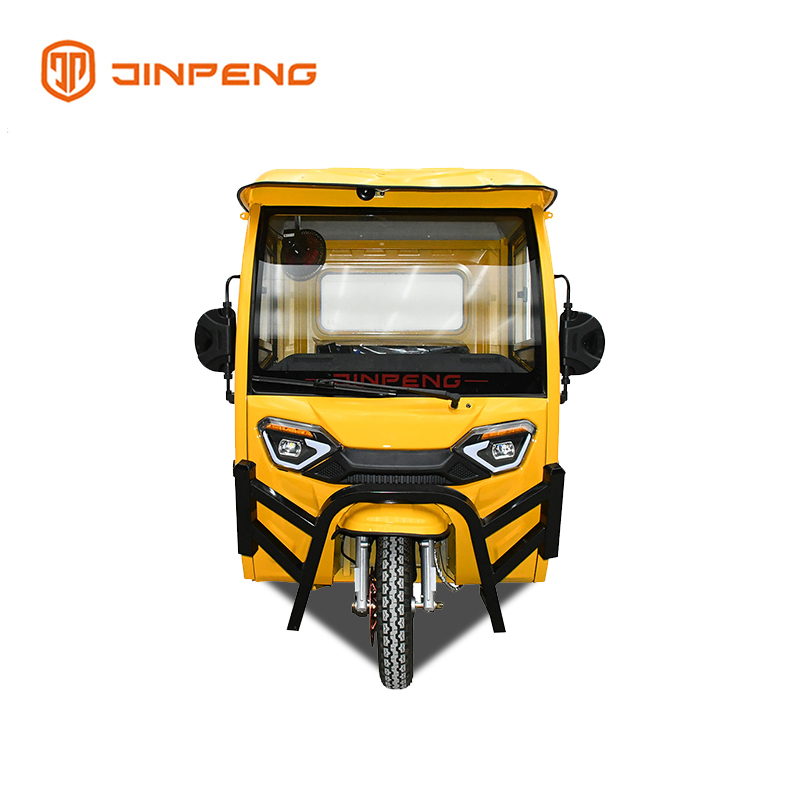
Validating the Certificate of Conformity (CoC) requires intense scrutiny. You must actively check the validity of any CoC provided by a manufacturer. Look specifically for the official e-mark designation. An authentic document features a homologation number issued by an authorized European transport authority. For instance, the RDW in the Netherlands or the KBA in Germany frequently issue these numbers. You can contact these agencies directly to verify the document's authenticity.
Hardware must match the paperwork perfectly to pass inspection. Factory Vehicle Identification Numbers (VINs) utilize a standardized 17-character structure. You must cross-reference this structure with the homologation documents. Motor wattage and top speed must physically align with the declared specifications. Avoid suppliers using bait-and-switch tactics. Some manufacturers show a compliant CoC but ship a vehicle featuring an unapproved, cheaper motor. Inspect the metal identification plates on the chassis to confirm the details.
Always prioritize third-party audits during your evaluation phase. Do not rely solely on factory-issued PDF files, as these are easily altered. Verify testing reports from recognized technical services globally. Organizations like TÜV, SGS, or IDIADA provide independent, trustworthy validation of the factory's claims.
Execute this proven audit sequence when engaging new suppliers:
Customs clearance demands flawless administrative execution. Your freight forwarder relies on specific documents to release your cargo smoothly. Any missing page can stall the process for weeks.
Core freight documents form the backbone of your shipment. You must provide a precise Commercial Invoice and an accurate Packing List. You also need the Bill of Lading (BoL) and a standardized Certificate of Origin. Customs officials use these documents to establish the financial value, tariff classification, and geographical source of your goods. Vehicles generally fall under specific HS Codes, such as 8703.80 for electric motor vehicles, which dictate your import duty rates.
Vehicle and homologation paperwork requires equal attention. You need the original EEC certificates on file. The factory must supply a physical, signed CoC for each individual vehicle chassis packed in your container. Additionally, external chargers and electronic accessories require valid CE declarations. Customs officers often check chargers independently of the vehicle.
Battery safety documentation dictates your logistics timeline. Lithium-ion batteries face intense scrutiny at all European ports due to fire risks. You must supply UN38.3 test reports. These reports prove the batteries survived extreme thermal, vibration, and shock testing. Material Safety Data Sheets (MSDS) are also strictly mandatory. Shipping lines will instantly reject your booking without these safety files.
Essential Import Document Checklist
| Document Category | Specific Document Name | Primary Purpose & Requirement |
|---|---|---|
| Freight & Value | Commercial Invoice & Packing List | Declares shipment value for VAT and duty calculations. |
| Freight & Value | Bill of Lading (BoL) | Acts as the official receipt of freight services and title of goods. |
| Homologation | Certificate of Conformity (CoC) | Proves L5e street-legal compliance for local EU registration. |
| Safety | CE Declaration of Conformity | Verifies safety standards for included battery chargers. |
| Battery Transport | UN38.3 Test Report & MSDS | Mandatory for sea freight booking; proves lithium battery safety. |
Profitability requires precise mathematical forecasting. You must analyze your total landed cost thoroughly. Factor in ocean freight charges, import duties, customs processing fees, and local warehousing expenses. Compare these accumulated figures against realistic European retail price points. This analysis helps you project accurate profit margins before placing a capital-intensive volume order.
Benchmarking provides a highly reliable baseline for commercial viability. We recommend using the E-TJ150 electric tricycle as an optimal case study. It represents a carefully balanced commercial offering. When evaluating this model, examine its payload capacity and battery range metrics. Look closely at its EEC-compliant component build. Quality suspension, robust braking systems, and weather-resistant wiring define a profitable import model. You can use these specifications as your minimum viable standard when assessing other manufacturers.
Use-case alignment ensures consistent sales volume. Assess whether the vehicle specifications truly match your target market environment. Last-mile urban delivery fleets need large cargo boxes and high stop-and-go efficiency. Commuters prefer enclosed cabin comfort to handle European winters. Agricultural workers demand high motor torque and rugged off-road capable suspension. Match your selected vehicle model directly to the specific daily operations of your regional buyers.
EEC homologation legally covers the entire European Union. However, local bureaucracy varies wildly between member states. National or provincial authorities handle the actual license plate registration process. For example, Germany utilizes the KBA (Kraftfahrt-Bundesamt), while France relies on the ANTS system for the Carte Grise. You must understand these local nuances to guide your customers successfully.
Distributors carry the crucial responsibility of preparing the end-user. Retail buyers need specific documentation to obtain license plates easily. Supply them with the original printed CoC, a clear localized commercial invoice, and a compliant translated vehicle manual. When customers secure local insurance effortlessly, your brand reputation soars. Many buyers will abandon a brand if the local motor vehicle office rejects their paperwork.
Anticipate major policy shifts across the continent. Incoming ESG (Environmental, Social, and Governance) mandates affect corporate fleet purchasing decisions heavily. Urban low-emission zones (LEZs) push businesses aggressively toward electric three-wheelers. Future compliance trends will likely demand even stricter battery recycling protocols under the EU Battery Regulation. Stay ahead of these legislative shifts to maintain your competitive edge and secure government subsidy eligibility for your buyers.
Your manufacturer must function as a reliable long-term partner. A supplier's commitment to supplying spare parts matters immensely. Honoring warranties is just as critical as providing the initial certification. If a commercial customer breaks a mirror or burns out a controller, you need replacement parts immediately. Negotiate a clear Service Level Agreement (SLA) regarding spare part lead times before signing the initial contract.
Always place sample orders first. Order a single unit or a minimal viable container initially. This vital step lets you test physical build quality directly. You can audit document accuracy in real time during customs clearance. It also allows you to test actual battery degradation and motor thermal performance under local weather conditions before committing to massive volume.
Define clear next actions for your sourcing team to eliminate substandard suppliers quickly:
Importing an EEC-certified three-wheeler remains a highly profitable venture. However, commercial success requires rigorous due diligence applied to certification and documentation. You protect your capital investment by validating every single homologation document before shipping. Bypassing these audit steps guarantees customs seizures and financial losses.
Take decisive action today to secure your vehicle supply chain. Download a comprehensive import checklist to guide your procurement team. Contact your sourcing experts to review detailed vehicle specifications thoroughly. Request a detailed consultation to build customized, street-legal wholesale solutions tailored precisely to your European market.
A: No. CE marks apply strictly to electronics and machinery safety. Public road registration requires a specific EEC homologation (Certificate of Conformity) for the L5e vehicle class. Without this CoC, local transport authorities will reject your registration application.
A: Request the complete test report and the homologation number from the supplier. You can verify this exact number directly with the European transport ministry that allegedly issued it, such as the RDW in the Netherlands or the KBA in Germany.
A: Shipping lines universally require UN38.3 test reports and an MSDS for lithium batteries. European customs authorities may also require specific RoHS and REACH compliance documents for the battery components to ensure environmental safety standards are met.
A: In most EU countries, an L5e vehicle can be driven with a standard B (car) license or an A1/A (motorcycle) license. This depends heavily on the specific motor output and local national laws. Distributors must clarify this for their target region.


